
Explore Python
Python is a high-level, interpreted, and general-purpose programming language that has become one of the most popular languages in the world. Created by Guido van Rossum and first released in 1991, Python was designed with a core philosophy: code readability and simplicity.
37
Courses
22
Learners
Introduction to Python
Python is a high-level, interpreted, and general-purpose programming language that has become one of the most popular languages in the world. Created by Guido van Rossum and first released in 1991, Python was designed with a core philosophy: code readability and simplicity.
Python's design philosophy is famously summarized in "The Zen of Python" (PEP 20), which includes aphorisms such as:
- "Beautiful is better than ugly."
- "Explicit is better than implicit."
- "Simple is better than complex."
- "Readability counts."
By prioritizing clean syntax, Python allows programmers to express concepts in fewer lines of code than would be possible in languages such as C++ or Java.
Key Features of Python
Python’s widespread adoption across academia, startups, and tech giants alike is driven by several defining features:
1. Easy to Learn and Read
Python’s syntax closely resembles the English language. It does not use curly braces {} to define blocks of code; instead, it relies on whitespace indentation. This forces developers to write clean, structured, and highly readable code.
2. Interpreted Language
Python is processed at runtime by the interpreter. You do not need to compile your program before executing it. This makes the development cycle (write, run, debug) incredibly fast and interactive.
3. Dynamically Typed
In Python, you do not need to declare the data type of a variable when you create it. The interpreter determines the type automatically at runtime. This provides immense flexibility, though it requires careful testing to avoid runtime type errors.
4. Multi-Paradigm Support
Python supports multiple programming paradigms, allowing developers to choose the best approach for their specific problem:
- Object-Oriented Programming (OOP): Focuses on classes and objects.
- Procedural Programming: Uses structured steps and functions.
- Functional Programming: Treats computation as the evaluation of mathematical functions.
5. Extensive Standard Library and Ecosystem
Often described as having a "batteries included" philosophy, Python comes with a massive standard library containing built-in modules for everything from file I/O and system calls to web browsing and JSON parsing. Beyond the standard library, the Python Package Index (PyPI) hosts hundreds of thousands of third-party packages.
Core Syntax and Concepts
To understand Python, it is helpful to look at how it handles basic programming constructs.
Variables and Data Types
Python supports standard data types out of the box, including integers, floats, strings, booleans, lists, tuples, dictionaries, and sets.
# Variable assignment
age = 30  # Integer
height = 5.9  # Float
name = "Alice"  # String
is_developer = True  # Boolean

# Collections
skills = ["Python", "SQL", "Machine Learning"]  # List (mutable)
coordinates = (10.0, 20.0)  # Tuple (immutable)
user_profile = {"username": "alice99", "role": "admin"}  # Dictionary (key-value)
Control Flow
Python uses standard control flow statements like if, elif, else, for, and while, utilizing indentation to define scope.
# Conditional statement
score = 85
if score >= 90:
    print("Grade: A")
elif score >= 80:
    print("Grade: B")
else:
    print("Grade: C")

# Loop through a list
for skill in skills:
    print(f"I am skilled in {skill}")
Functions and Modules
Functions are defined using the def keyword. Python encourages modular programming, allowing you to import code from other files (modules).
def greet(user_name):
    return f"Hello, {user_name}!"

# Calling the function
message = greet("Alice")
print(message)
Major Use Cases of Python
Python's versatility makes it the go-to language for a wide variety of industries and applications.
Data Science and Analytics
Python is the undisputed leader in data science. Its simple syntax allows statisticians and data analysts to manipulate complex datasets without worrying about low-level memory management.
- Key Libraries: Pandas (data manipulation), NumPy (numerical computing), Matplotlib and Seaborn (data visualization).
Machine Learning and Artificial Intelligence (AI)
The rapid rise of AI has been fueled largely by Python. Almost all major deep learning and machine learning frameworks are built with Python APIs.
- Key Libraries: TensorFlow, PyTorch, Scikit-Learn, Keras.
Web Development
Python is widely used for building secure, scalable, and maintainable web applications. It powers the backends of major platforms like Instagram, Spotify, and Reddit.
- Key Frameworks: Django (full-stack, "batteries-included"), Flask (lightweight and micro-framework), FastAPI (modern, fast, and asynchronous).
Automation and Scripting
System administrators and DevOps engineers use Python to automate repetitive tasks, manage cloud infrastructure, scrape websites, and parse logs. Its ability to interact seamlessly with the operating system makes it an excellent scripting tool.
Advantages and Limitations
While Python is incredibly powerful, it is important to understand both its strengths and its weaknesses.
Advantages
- High Productivity: Developers can write less code and build prototypes rapidly.
- Massive Community: A large, active global community means endless tutorials, documentation, and forums (like Stack Overflow) to help solve bugs.
- Enterprise Support: Backed by tech giants like Google, Meta, and Microsoft, ensuring its continuous evolution.
Limitations
- Execution Speed: As an interpreted, dynamically typed language, Python is slower than compiled languages like C, C++, or Rust.
- Mobile Development: Python is rarely used for native mobile app development (iOS and Android), where Swift, Kotlin, or Flutter dominate.
- Memory Consumption: Python's ease of use comes at the cost of higher memory consumption, making it less suitable for memory-intensive or real-time embedded systems.
Conclusion
Python has evolved from a niche scripting language into a foundational pillar of modern technology. Whether you are a beginner writing your first "Hello World" program, a web developer building enterprise applications, or a research scientist training cutting-edge AI models, Python provides the tools, libraries, and community support needed to bring your ideas to life.
Topic Overview
- 37 Courses available
- 22 Active learners
Featured Courses
Top picks hand-selected by our team for Python.

All Python Courses
Browse all courses in Python.

Mastering AI-Driven Development with OpenAI Codex: From Setup to Autonomous Agents
Master OpenAI Codex to build, manage, and deploy applications using autonomous AI agents. Learn to set up workspaces, leverage git worktrees, configure Agents.md, and build three complete applications step-by-step from scratch.

Data Analysis and Visualization Fundamentals with Python, Pandas, and Matplotlib
Master the basics of data science by learning how to analyze and visualize real-world datasets. Using Python, Pandas, and Matplotlib within Jupyter Notebooks, you will plot population growth trends and compare relative data.

OpenCode Mastery: Building Provider-Agnostic AI Coding Workflows
Master OpenCode, the open-source AI coding agent. Learn to run local models with Ollama, connect cloud models via OpenRouter, use Plan and Build modes, and integrate MCP servers to build powerful applications without vendor lock-in.
Foundations of Web Development: Practical HTML for Beginners
Master the essentials of modern web development by learning HTML from scratch. In this practical guide, you will build structured, semantic web pages using headers, lists, links, images, tables, and forms, establishing a rock-solid foundation for your software development journey.
Java Programming Foundations: Master the Fundamentals of Software Development
Master Java programming fundamentals from scratch. Learn core concepts like variables, reference types, and control flow structures, then apply your skills by building a real-world Mortgage Calculator. This course establishes a solid foundation in software development and clean coding principles.
LLM App Development: Building Powered Applications with LangChain
Master the fundamentals of LangChain to build LLM-powered applications. This beginner-friendly course guides you through prompt templates, chains, agents, conversational memory, and document loaders using Python and OpenAI.
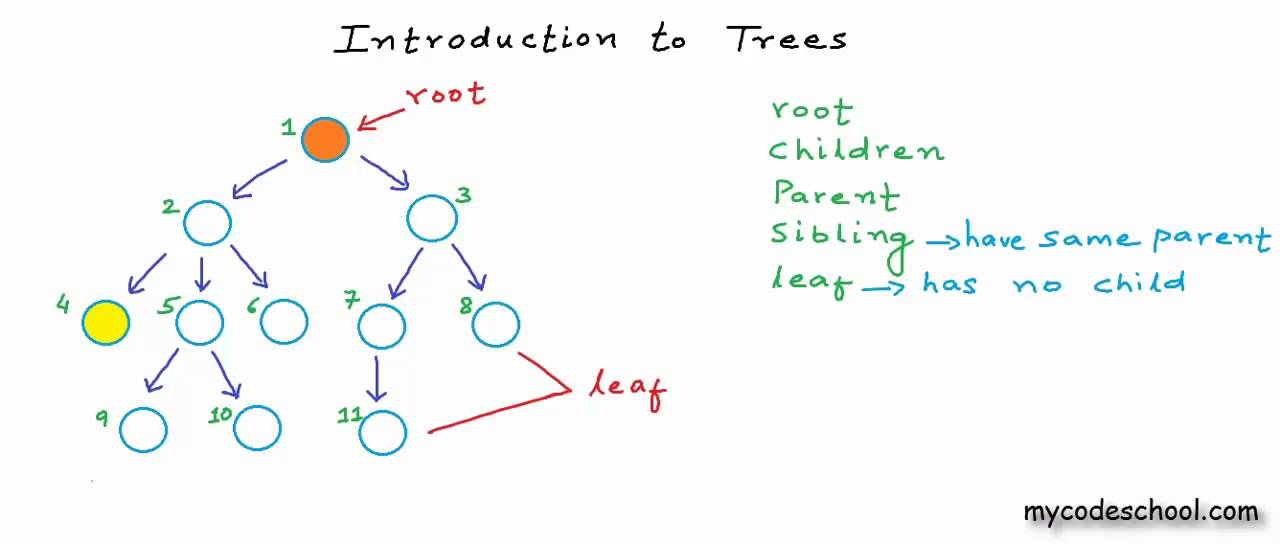
Demystifying Trees: Foundations of Hierarchical Data Structures
Dive into non-linear data structures with this introductory guide to trees. Learn essential terminology, structural properties, and real-world applications to elevate your programming and algorithmic thinking.
Mastering Binary Search: Efficient Search Algorithms for Coding Interviews
Master the binary search algorithm to solve lookup problems in logarithmic time. Learn to implement iterative and recursive approaches, analyze time complexity, and apply this fundamental search technique to excel in technical coding interviews.

Applied Linear Algebra: Real-World Applications of Matrices
Explore the practical power of matrices and linear algebra. Learn how these mathematical tools drive computer graphics, Google's PageRank algorithm, physics simulations, and modern data science.
Sliding Window Mastery: Accelerating Coding Interview Prep
Master the sliding window algorithm to solve complex subarray and substring problems efficiently. Learn to transition from brute-force O(N^2) to optimal O(N) time complexity, preparing you to ace competitive programming and top-tier technical interviews with confidence.
Popular Channels
Discover the best YouTube creators in this space.


Learn from the Best
Top educators from YouTube, all in one place.

Caleb Curry
@codebreakthroughProgramming Made Fun and Simple Business inquiries: calebcurry@kernelmanagement.com High quality tutorials that are fun, educational, and easy to follow. Teaching programming is my passion! I find joy in making complex material easy to understand. As an Amazon Associate I earn from qualifying purchases.

Coder Army
@coderarmy9Hi Coder, We are on a mission to create Best Coder in our Country and for that we are putting best content for Students. I am Rohit Negi who graduated from IIT Guwahati and got Highest Placement in India in 2021. I got AIR 202 in GATE CSE in 2020. Brand Collaboration: rohitnegi.business9@gmail.com

freeCodeCamp.org
@freecodecampLearn math, programming, and computer science for free. A 501(c)(3) tax-exempt charity. We also run a free learning interactive platform at freecodecamp.org
Didn't find what you were looking for?
Explore other topics or browse all courses to find exactly what you're looking for.