
Architecting Production-Ready AI Agents: From LLM Fundamentals to Multi-Agent Workflows
Master the fundamentals of AI agents, LangChain, vector databases, and RAG. Learn to build stateful multi-agent workflows with LangGraph and integrate external tools using the Model Context Protocol (MCP) through hands-on labs.
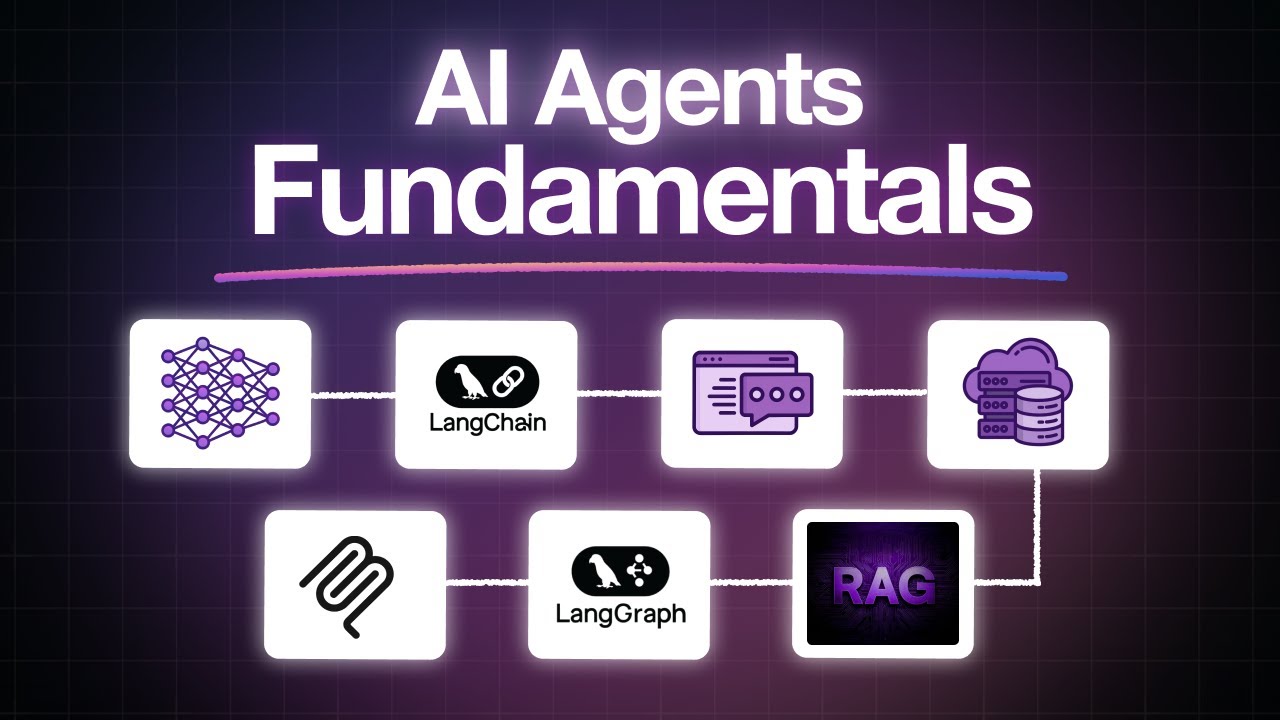
Course Overview
Welcome to Architecting Production-Ready AI Agents, a comprehensive, hands-on guide designed to take you from AI fundamentals to building sophisticated, multi-agent systems. This course bridges the gap between theoretical understanding and practical implementation, enabling you to build real-world AI assistants capable of handling complex workflows and searching massive document datasets.
Target Audience
This course is specifically designed for:
- Developers looking to integrate advanced AI capabilities into their applications.
- Data Engineers wanting to build robust retrieval pipelines and semantic search engines.
- AI Enthusiasts and practitioners eager to master state-of-the-art tools like LangGraph and Model Context Protocol (MCP).
Prerequisites
To get the most out of this course, you should have:
- Basic familiarity with programming concepts (Python is highly recommended).
- A fundamental understanding of databases and data structures.
- No prior AI or machine learning experience is required!
Tools & Technologies Covered
Throughout the hands-on labs, you will work with:
- LangChain for orchestrating LLM components.
- Vector Databases (such as ChromaDB and Pinecone) for high-dimensional semantic search.
- LangGraph for building complex, stateful multi-agent workflows.
- Model Context Protocol (MCP) to connect your models to external tools and data sources.
- OpenAI API for leveraging state-of-the-art LLMs.
Key Learning Outcomes
By the end of this course, you will be able to:
- Understand Vector Embeddings: Learn how machine learning models translate unstructured data (text, images) into numerical vectors in a high-dimensional space.
- Differentiate Databases: Understand why traditional relational databases are inefficient for semantic search compared to dedicated vector databases.
- Implement Similarity Search: Query high-dimensional vector data using distance metrics rather than exact keyword matches.
- Build RAG Systems: Combine retrieval with generation to create intelligent document search applications.
- Develop Stateful Workflows: Use LangGraph to manage multi-step, stateful AI agent interactions.
- Integrate Tools via MCP: Securely connect your AI agents to external tools and systems.
Course Content
LLM Fundamentals & Prompt Engineering
Introduction to AI Agents & LLM Mechanics
Embeddings & Vector Representations
Hands-On: First API Call & LangChain Labs
Advanced Prompt Engineering & Practice
Orchestration with LangChain & Vector Databases
Orchestrating LLMs with LangChain
Hands-on LangChain Practice
Deep Dive into Vector Databases
Building a Semantic Search Engine
Advanced RAG, LangGraph, and Model Context Protocol (MCP)
Retrieval Augmented Generation (RAG) Foundations & Implementation
Building Stateful Workflows with LangGraph
Integrating External Tools with Model Context Protocol (MCP)
This course includes
- 1h 3m on-demand video
- 11 lessons across 3 chapters
- 3 interactive quizzes
- Access on mobile and desktop
- Source playlist on YouTube
Share
Related Courses

Mastering Data Structures and Algorithms in Java: From Big O to Interview Success
Master essential data structures and algorithms in Java to ace technical coding interviews. Learn Big O complexity, dynamic programming, trees, graphs, and algorithmic patterns through comprehensive problem-solving techniques.

Enterprise Java Backend with Spring Framework & Spring Boot: From First Principles to Production
Master enterprise Java backend engineering with Spring Framework and Spring Boot. Learn IoC, dependency injection, Spring MVC, Hibernate, JPA transactions, JWT authentication, OAuth 2.0, and automated testing from first principles to build production-grade web applications.
Mastering AI Fluency: The 4D Framework for Collaborative AI
Develop a practical framework for human-AI collaboration. Learn to effectively delegate, describe, discern, and apply diligence when working with generative AI models like Claude.