
AI-Assisted Database Engineering: Master Claude Code for System Design
Learn to leverage Anthropic's Claude Code CLI to refactor, build, and optimize high-performance database systems. Explore installation, shell modes, and sub-agents while analyzing NoSQL migrations from MongoDB to ScyllaDB.
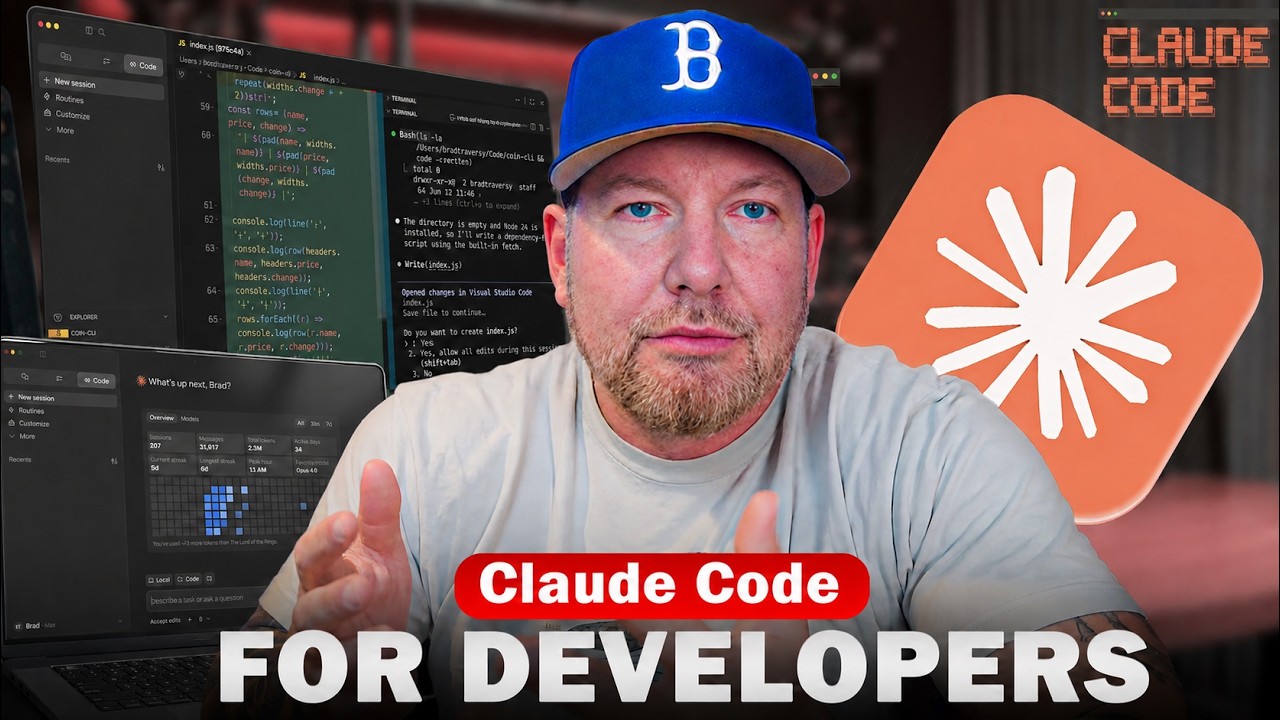
Course Overview
Welcome to the ultimate practical guide to Claude Code, Anthropic's revolutionary command-line tool for agentic coding. In this course, software engineers, backend developers, and system design enthusiasts will learn how to integrate Claude Code into their daily development workflows.
To ground these AI capabilities in real-world engineering, we will use Claude Code to analyze, refactor, and design high-performance database architectures. Specifically, we will explore the system design evolution of massive message storage systems—examining transitions from MongoDB to Apache Cassandra and ultimately ScyllaDB.
What You Will Learn
By the end of this course, you will be able to:
- Install, configure, and launch the Claude Code CLI.
- Manage models, usage limits, token context, and global sessions.
- Master various interaction modes including Shell Mode, Plan Mode, and Sub-Agents.
- Apply Claude Code to refactor existing codebases, manage context, and handle file system initializations (
Claude.md). - Understand the scalability limitations of MongoDB and Apache Cassandra when handling massive, write-heavy workloads.
- Analyze how high-scale platforms migrate database systems with zero downtime.
- Grasp data partitioning and bucketing strategies used to optimize message storage and retrieval.
Prerequisites
To get the most out of this course, you should have:
- Basic knowledge of database systems, NoSQL concepts, and distributed systems architecture.
- Familiarity with terminal/CLI environments and basic programming concepts.
- A general understanding of AI coding assistants.
Tools & Technologies
- Claude Code CLI (Anthropic's agentic command-line developer tool)
- VS Code & VS Code Extension
- MongoDB, Apache Cassandra, and ScyllaDB (for database architectural case studies)
- Go / C++ (languages used in high-performance NoSQL database engines)
Course Content
Introduction to Claude Code and CLI Setup
Understanding Claude Code and Agentic Workflows
Installing and Initializing the Claude CLI
Setting Up Claude Code in VS Code and Configuring Preferences
Interaction Modes, Prompts, and Session Management
Mastering Claude Code Interaction Modes
Managing Session Context and Token Budgets
Project Orchestration with Claude.md and Plan Mode
Advanced AI Engineering: Refactoring, MCPs, and Sub-Agents
Code Refactoring and Context Management in Claude Code CLI
Project Onboarding, Claude.md, and Plan Mode
Advanced Extensibility: Skills, MCPs, and Sub-Agents
This course includes
- 1h 27m on-demand video
- 9 lessons across 3 chapters
- 3 interactive quizzes
- Access on mobile and desktop
- Source playlist on YouTube
Share
Related Courses

Mastering Data Structures and Algorithms in Java: From Big O to Interview Success
Master essential data structures and algorithms in Java to ace technical coding interviews. Learn Big O complexity, dynamic programming, trees, graphs, and algorithmic patterns through comprehensive problem-solving techniques.

Enterprise Java Backend with Spring Framework & Spring Boot: From First Principles to Production
Master enterprise Java backend engineering with Spring Framework and Spring Boot. Learn IoC, dependency injection, Spring MVC, Hibernate, JPA transactions, JWT authentication, OAuth 2.0, and automated testing from first principles to build production-grade web applications.
Mastering AI Fluency: The 4D Framework for Collaborative AI
Develop a practical framework for human-AI collaboration. Learn to effectively delegate, describe, discern, and apply diligence when working with generative AI models like Claude.