
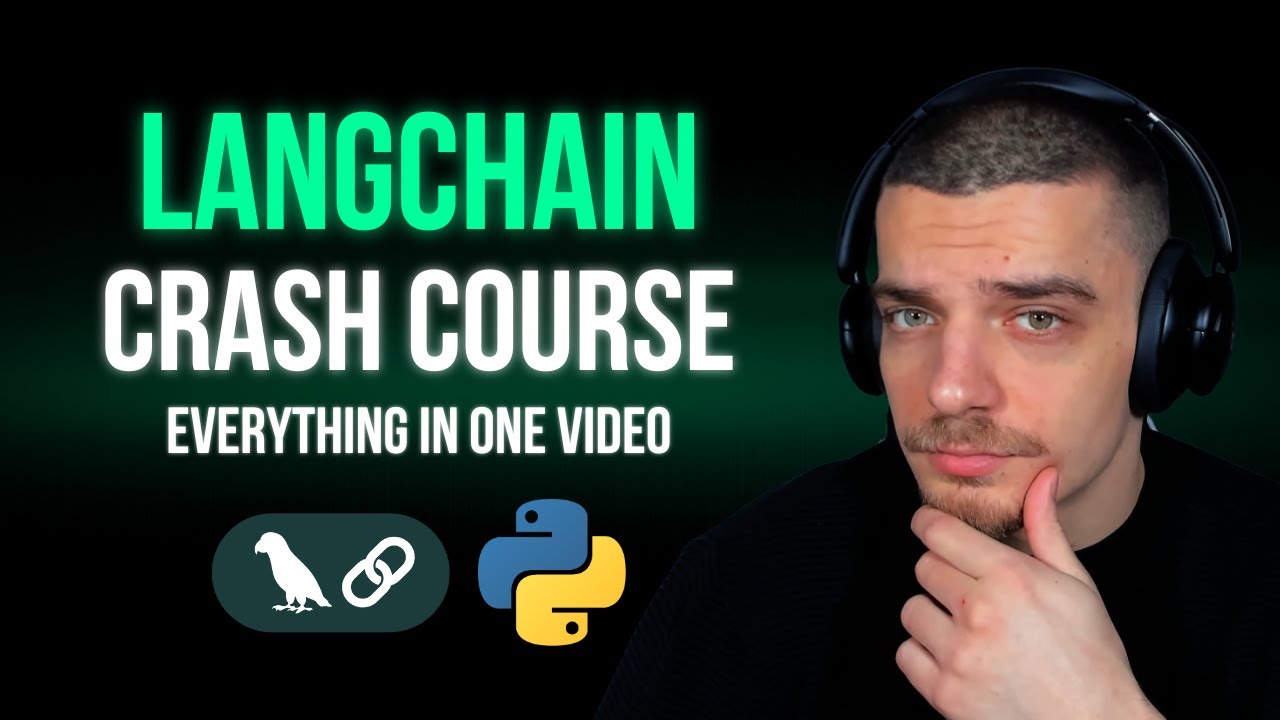
Building Intelligent AI Agents with Python and LangChain
Master the LangChain Python framework to build intelligent, autonomous AI agents. Learn to implement conversations, streaming, RAG with vector stores, dynamic prompts, and custom middleware for production-ready applications.
Course Overview
Welcome to Building Intelligent AI Agents with Python and LangChain! This course is designed to take you from basic LLM integration to building fully autonomous, production-grade AI agents using Python.
LangChain is the premier framework for developing applications powered by language models. You will learn to orchestrate models, manage stateful conversations, connect private data, and control agent behavior dynamically.
What You'll Learn
- Core LangChain Ecosystem: Understand how LangChain components work together.
- Conversational Memory: Keep track of chat history for context-aware interactions.
- Retrieval-Augmented Generation (RAG): Connect models to vector databases for factual grounding.
- Dynamic Control: Implement dynamic prompts and runtime model switching.
- Custom Middleware: Write middleware to monitor, log, and modify agent execution.
Prerequisites
- Intermediate Python knowledge (asynchronous programming, dicts, lists).
- Basic understanding of APIs and Large Language Models (LLMs).
- API keys for OpenAI or Anthropic (Claude).
Course Content
Introduction to LangChain and Environment Setup
Introduction to the LangChain Ecosystem
Setting Up Your Python Environment for LangChain
Building Your First Simple AI Agent
Standalone Model Inference with LangChain
Building Core Agent Capabilities
Creating Your First Simple AI Agent
Standalone Model Inference
Managing Multi-Turn Conversations
Real-Time Response Streaming
Advanced Agent Design: Memory and Structured Output
Implementing Conversational Memory and Streaming in LangChain
Structuring Agent Outputs with Pydantic Schemas
Processing Multimodal Inputs in LangChain
Retrieval-Augmented Generation (RAG) and Vector Stores
Document Processing and Vector Embeddings
Vector Stores and Retrieval-Augmented Generation
Dynamic Orchestration and Custom Middleware
Configuring Dynamic System Prompts
Implementing Dynamic Model Selection
Building Custom Agent Middleware
Utilizing LangChain Callback Handlers
This course includes
- 1h 2m on-demand video
- 17 lessons across 5 chapters
- 5 interactive quizzes
- Access on mobile and desktop
- Source playlist on YouTube
Share
Related Courses

Enterprise Java Backend with Spring Framework & Spring Boot: From First Principles to Production
Master enterprise Java backend engineering with Spring Framework and Spring Boot. Learn IoC, dependency injection, Spring MVC, Hibernate, JPA transactions, JWT authentication, OAuth 2.0, and automated testing from first principles to build production-grade web applications.
Mastering AI Fluency: The 4D Framework for Collaborative AI
Develop a practical framework for human-AI collaboration. Learn to effectively delegate, describe, discern, and apply diligence when working with generative AI models like Claude.

Mastering AI-Driven Development with OpenAI Codex: From Setup to Autonomous Agents
Master OpenAI Codex to build, manage, and deploy applications using autonomous AI agents. Learn to set up workspaces, leverage git worktrees, configure Agents.md, and build three complete applications step-by-step from scratch.