
Explore Artificial Intelligence
Artificial Intelligence (AI) is one of the most transformative and rapidly evolving fields of modern technology. At its core, AI is a branch of computer science dedicated to creating systems capable of performing tasks that would typically require human intelligence. These tasks include learning, reasoning, problem-solving, perception, and understanding natural language.
7
Sub-Topics
20
Courses
23
Learners
Introduction to Artificial Intelligence
Artificial Intelligence (AI) is one of the most transformative and rapidly evolving fields of modern technology. At its core, AI is a branch of computer science dedicated to creating systems capable of performing tasks that would typically require human intelligence. These tasks include learning, reasoning, problem-solving, perception, and understanding natural language.
Rather than relying solely on static, pre-programmed instructions, modern AI systems analyze vast amounts of data to identify patterns, make decisions, and improve their performance over time. Today, AI powers everything from the search engines we use daily to autonomous vehicles and advanced medical diagnostic tools.
The Evolution of AI: A Brief History
The concept of machine intelligence has roots in ancient philosophy, but the formal field of Artificial Intelligence began in the mid-20th century.
The Foundations (1950s)
The intellectual foundations of AI were laid by British mathematician Alan Turing. In 1950, he proposed the "Turing Test" as a measure of machine intelligence—asking whether a machine could imitate human conversation closely enough to fool a human judge.
The term "Artificial Intelligence" was officially coined in 1956 at the Dartmouth Summer Research Project on Artificial Intelligence, organized by John McCarthy, Marvin Minsky, Nathaniel Rochester, and Claude Shannon. This workshop is widely considered the birth of AI as an academic discipline.
AI Winters and Resurgence
In the decades following the Dartmouth conference, AI experienced cycles of intense optimism followed by periods of disappointment and funding cuts, known as "AI Winters." Early systems struggled with the "combinatorial explosion" of possibilities in complex problem-solving, and computer hardware was simply not powerful enough to handle the required computations.
The resurgence of AI began in the late 1990s and accelerated in the 2010s, driven by three major catalysts:
- The Rise of Big Data: The internet generated massive datasets required to train complex models.
- Advanced Hardware: The adaptation of Graphics Processing Units (GPUs) allowed for parallel processing of complex mathematical computations.
- Algorithmic Breakthroughs: The refinement of deep neural networks revolutionized how machines process information.
Categorizing Artificial Intelligence
To understand AI, it is helpful to categorize it based on two distinct frameworks: capability and functionality.
Classification by Capability
- Artificial Narrow Intelligence (ANI) / Weak AI: This is the only type of AI that currently exists. ANI systems are designed and trained to perform specific, highly defined tasks. Examples include facial recognition software, language translators, and chess-playing computers. While highly proficient at their designated tasks, they cannot apply their intelligence to other domains.
- Artificial General Intelligence (AGI) / Strong AI: AGI refers to a theoretical machine that possesses the ability to understand, learn, and apply knowledge across any intellectual task, much like a human being. An AGI system would exhibit adaptability, common sense, and the ability to transfer skills from one domain to another.
- Artificial Superintelligence (ASI): A hypothetical level of AI that surpasses human intelligence across all fields, including scientific creativity, general wisdom, and social skills.
Classification by Functionality
- Reactive Machines: The simplest level of AI. These systems do not store memories or use past experiences to influence current decisions. They react directly to immediate inputs. Example: IBM’s Deep Blue, which defeated chess grandmaster Garry Kasparov.
- Limited Memory: These systems can store past data and decisions for a short period to inform future actions. Most modern AI applications fall into this category. Example: Self-driving cars, which track the speed and direction of other vehicles over time to navigate safely.
- Theory of Mind: A theoretical class of AI that would understand human emotions, beliefs, and thoughts, allowing them to interact socially in a human-like manner.
- Self-Aware AI: The ultimate, hypothetical stage of AI development where machines possess self-awareness, consciousness, and an internal state of being.
Key Subfields and Technologies
Artificial Intelligence is an umbrella term encompassing several interconnected subfields.
Machine Learning (ML)
Machine Learning is the engine behind most modern AI. Instead of writing code with explicit rules, developers feed data into ML algorithms, allowing the system to "learn" how to perform a task. ML is generally divided into three paradigms:
- Supervised Learning: The model is trained on labeled data (e.g., teaching a system to recognize cats by showing it thousands of images labeled "cat").
- Unsupervised Learning: The model analyzes unlabeled data to find hidden patterns or groupings on its own (e.g., customer segmentation for marketing).
- Reinforcement Learning: The model learns through trial and error, receiving rewards for correct actions and penalties for incorrect ones (commonly used in robotics and gaming).
Deep Learning (DL)
A specialized subset of Machine Learning, Deep Learning is inspired by the structure and function of the human brain. It utilizes Artificial Neural Networks (ANNs) with many layers (hence "deep") to process data. Deep learning is responsible for major breakthroughs in image recognition, natural language processing, and generative AI.
Natural Language Processing (NLP)
NLP focuses on the interaction between computers and human language. It enables machines to read, decipher, understand, and generate human languages. Applications include translation services (e.g., Google Translate), voice assistants (e.g., Siri, Alexa), and Large Language Models (LLMs) like GPT-4.
Computer Vision
Computer Vision allows computers to extract meaningful information from digital images, videos, and other visual inputs. It is used in facial recognition security systems, medical imaging diagnostics, and the object-detection systems of autonomous vehicles.
Real-World Applications of AI
AI has transitioned from laboratory research to a foundational utility across global industries.
| Industry | Application | Impact |
|---|---|---|
| Healthcare | Diagnostic imaging, drug discovery, personalized medicine | Speeds up the identification of diseases like cancer and reduces the time required to bring new pharmaceuticals to market. |
| Finance | Algorithmic trading, fraud detection, credit scoring | Analyzes transactions in real-time to prevent fraud and automates complex market trading strategies. |
| Transportation | Autonomous driving, route optimization, predictive maintenance | Powers self-driving technology and optimizes logistics networks to reduce fuel consumption and delivery times. |
| Creative Industries | Generative art, copywriting, music composition | Assists creators by generating text, images, and audio, transforming the landscape of digital media production. |
Ethical Challenges and the Future of AI
As AI systems become more integrated into society, they bring significant ethical, social, and economic challenges that must be addressed.
Bias and Fairness
AI models learn from historical data. If the training data contains human biases, the AI will inevitably replicate and amplify those biases. This has raised concerns in areas like automated hiring, predictive policing, and loan approvals, where biased algorithms can perpetuate systemic discrimination.
Privacy and Surveillance
The effectiveness of AI relies on massive datasets, often containing personal information. The widespread deployment of facial recognition and data-harvesting algorithms raises critical questions about individual privacy, consent, and state surveillance.
Economic Impact and Job Displacement
While AI creates new industries and job roles, it also automates tasks historically performed by humans. This shift has the potential to displace workers in both blue-collar sectors (like manufacturing and transport) and white-collar sectors (such as customer service, legal analysis, and content creation).
The Alignment Problem
As AI systems grow more autonomous and powerful, ensuring that their goals align with human values and safety becomes paramount. Researchers are actively working on methods to guarantee that highly advanced AI systems remain controllable, transparent, and beneficial to humanity.
Topic Overview
- 20 Courses available
- 23 Active learners
Featured Courses
Top picks hand-selected by our team for Artificial Intelligence.




All Artificial Intelligence Courses
Browse all courses in Artificial Intelligence.

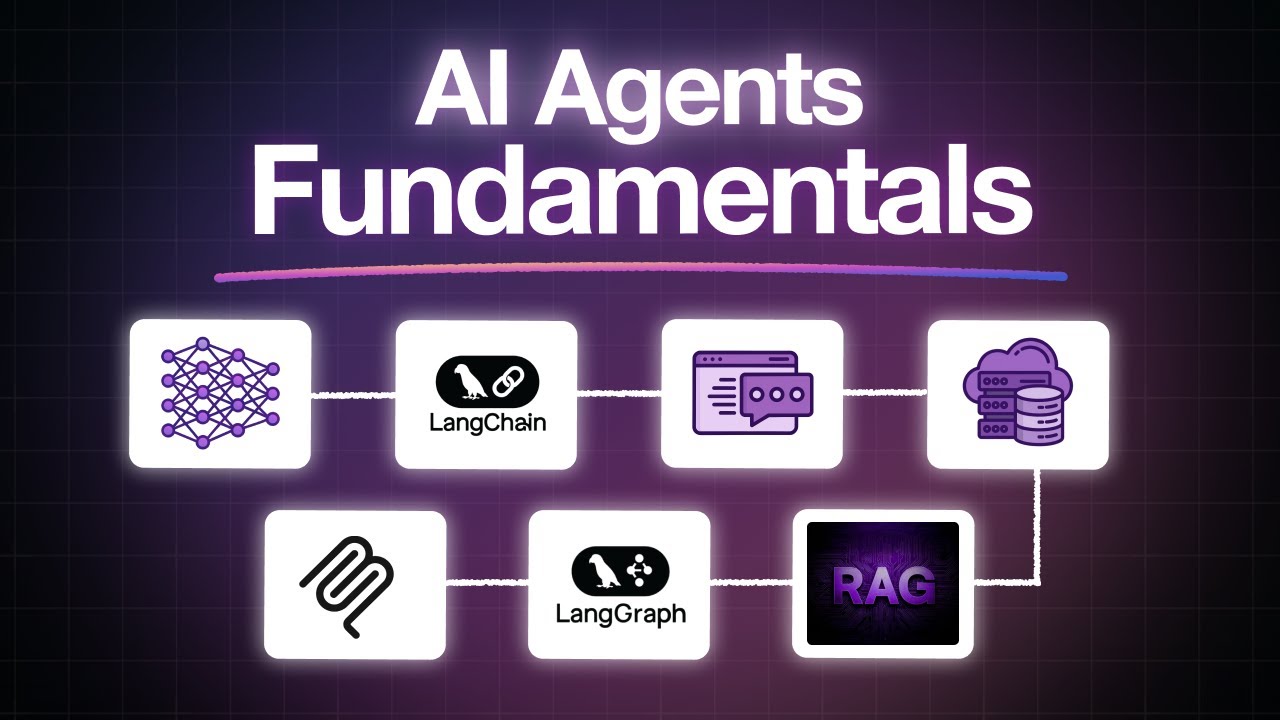
Mastering AI-Driven Development with OpenAI Codex: From Setup to Autonomous Agents
Master OpenAI Codex to build, manage, and deploy applications using autonomous AI agents. Learn to set up workspaces, leverage git worktrees, configure Agents.md, and build three complete applications step-by-step from scratch.

LLM App Development: Building Powered Applications with LangChain
Master the fundamentals of LangChain to build LLM-powered applications. This beginner-friendly course guides you through prompt templates, chains, agents, conversational memory, and document loaders using Python and OpenAI.
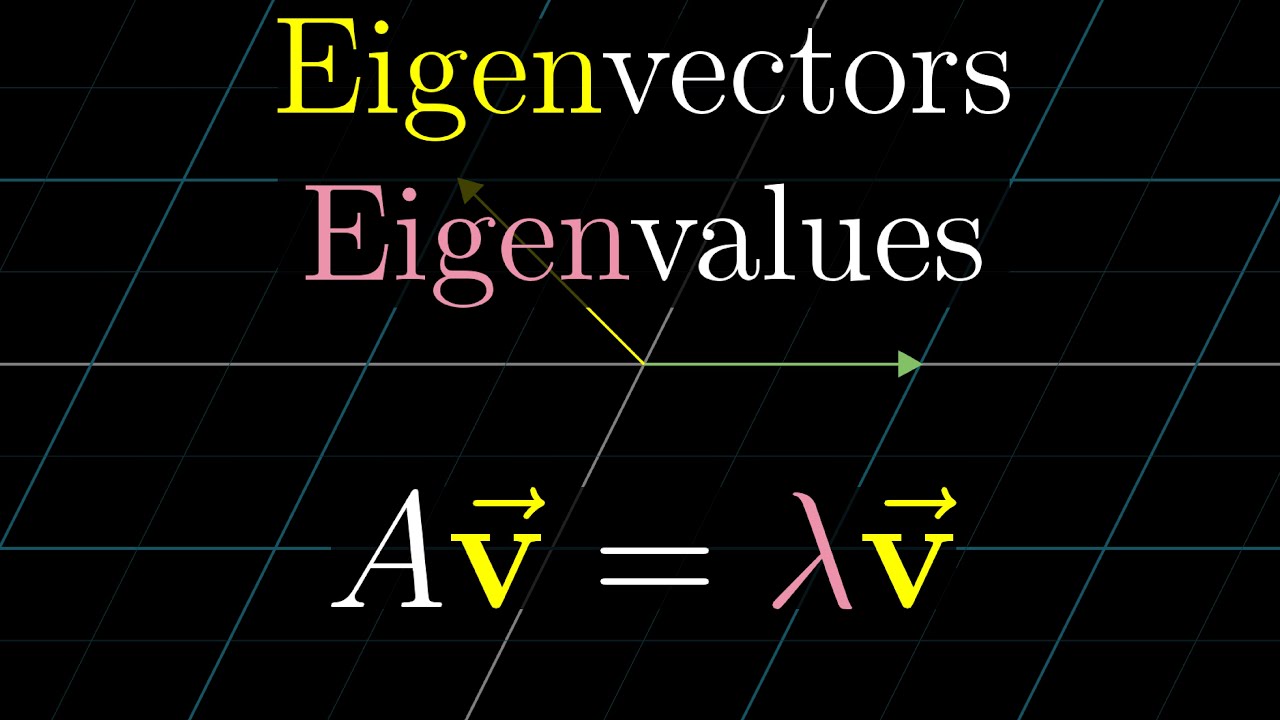
Visualizing Eigenvalues and Eigenvectors: The Essence of Linear Algebra
Master the visual intuition behind eigenvectors and eigenvalues. Learn how linear transformations stretch space, how to calculate eigenvalues, and why an eigenbasis is crucial for simplifying complex computations in physics, machine learning, and high-dimensional vector databases.

Applied Linear Algebra: Real-World Applications of Matrices
Explore the practical power of matrices and linear algebra. Learn how these mathematical tools drive computer graphics, Google's PageRank algorithm, physics simulations, and modern data science.

Building AI-Powered Automation Systems with Codex
Master Codex to build a fully functional YouTube comment intelligence system. Learn to configure APIs, design interactive dashboards, build reusable skills, deploy with GitHub and Vercel, and implement automated browser QA workflows.

AI-Powered Product Design: Building and Deploying with Claude Design
Learn to design, prototype, and deploy a complete brand and web application from scratch using Claude Design and Claude Code. Master design systems, landing pages, mobile prototypes, and Vercel deployment.

Deep Dive into LLMs: Building and Training GPT Models from Scratch
Master the inner workings of Large Language Models by coding a complete GPT-style architecture from scratch. Learn tokenization, multi-head attention, pretraining, and supervised fine-tuning using PyTorch and Python. Build, train, and align your own deep learning models.

Mastering AWS Cloud Foundations: CLF-C02 Certification Prep
Master core AWS services, cloud security, architecture, and billing models to ace the AWS Certified Cloud Practitioner (CLF-C02) exam. This comprehensive, structured guide provides foundational cloud knowledge, practical service overviews, and key exam preparation strategies for success.

Claude Code Mastery: Build and Refactor Apps 10x Faster
Supercharge your development workflow with Claude Code. Learn to install, configure, and use Anthropic's powerful command-line AI assistant to build, test, and refactor applications with project memory, plan mode, and model context protocols.

The Complete Software Engineer's Career Guide: From Foundations to AI Agents
Accelerate your software engineering career by mastering computer science foundations, design patterns, testing, and DevOps with Docker. Then, leap into the future of software development by building stateful, multi-agent AI systems using LangGraph, Python, and LangChain.
Popular Channels
Discover the best YouTube creators in this space.


Learn from the Best
Top educators from YouTube, all in one place.

Caleb Curry
@codebreakthroughProgramming Made Fun and Simple Business inquiries: calebcurry@kernelmanagement.com High quality tutorials that are fun, educational, and easy to follow. Teaching programming is my passion! I find joy in making complex material easy to understand. As an Amazon Associate I earn from qualifying purchases.

Coder Army
@coderarmy9Hi Coder, We are on a mission to create Best Coder in our Country and for that we are putting best content for Students. I am Rohit Negi who graduated from IIT Guwahati and got Highest Placement in India in 2021. I got AIR 202 in GATE CSE in 2020. Brand Collaboration: rohitnegi.business9@gmail.com

freeCodeCamp.org
@freecodecampLearn math, programming, and computer science for free. A 501(c)(3) tax-exempt charity. We also run a free learning interactive platform at freecodecamp.org
Didn't find what you were looking for?
Explore other topics or browse all courses to find exactly what you're looking for.