
Explore Agentic AI
Artificial Intelligence has undergone a rapid evolution. We have transitioned from Predictive AI (which forecasts trends based on historical data) to Generative AI (which creates text, images, and code based on prompts). Today, we are entering the era of Agentic AI.
3
Sub-Topics
38
Courses
27
Learners
Understanding Agentic AI: The Next Frontier of Artificial Intelligence
Artificial Intelligence has undergone a rapid evolution. We have transitioned from Predictive AI (which forecasts trends based on historical data) to Generative AI (which creates text, images, and code based on prompts). Today, we are entering the era of Agentic AI.
Unlike traditional generative models that act as passive, reactive assistants—waiting for a user prompt to generate a single response—Agentic AI refers to systems that exhibit agency. These are autonomous entities (AI agents) capable of perceiving their environment, formulating plans, making decisions, using external tools, and executing multi-step workflows to achieve specific, high-level goals with minimal human intervention.
Instead of asking an AI to "write an email," an Agentic AI system can be told to "manage my customer outreach campaign for the next month." The agent will then research prospects, draft personalized emails, monitor replies, schedule meetings, and update the CRM autonomously.
Core Characteristics of Agentic AI
To understand what makes an AI system "agentic," it is helpful to look at the core capabilities that distinguish it from standard Large Language Models (LLMs):
1. Autonomy and Goal-Orientation
Traditional AI requires step-by-step prompting. Agentic AI is goal-oriented. You provide the end objective (the "what"), and the agent figures out the execution path (the "how"). It can break down a complex, ambiguous goal into a series of smaller, actionable sub-tasks.
2. Planning and Reasoning
Agentic systems do not just generate the next word; they think before they act. They utilize advanced reasoning frameworks such as:
- Chain-of-Thought (CoT): Breaking down a problem step-by-step.
- Tree-of-Thoughts (ToT): Exploring multiple reasoning paths, evaluating progress, and backtracking if a path leads to a dead end.
- Self-Reflection: Analyzing its own output, identifying mistakes, and correcting its course of action dynamically.
3. Memory Management
For an agent to complete long-term tasks, it needs memory. Agentic AI utilizes two types of memory:
- Short-term Memory: Keeps track of the current context, conversation history, and immediate sub-tasks.
- Long-term Memory: Retains information over long periods, often utilizing vector databases to store and retrieve past experiences, user preferences, and external knowledge bases.
4. Tool Integration and Action
An agent is not confined to its training data. It can interact with the digital world by using tools. These tools include:
- Web browsers to search for real-time information.
- APIs to interact with software (e.g., sending Slack messages, updating databases, making financial transactions).
- Code interpreters to write and execute code on the fly to solve mathematical or logical problems.
The Architecture of an AI Agent
An AI agent is typically constructed using a modular architecture that wraps around a core foundation model (like GPT-4, Claude 3, or Llama 3).
- The Brain (LLM): The central processing unit that understands language, reasons, and decides which action to take next.
- The Planning Module: Deconstructs complex goals and schedules tasks.
- The Memory Module: Stores past interactions and retrieves relevant context.
- The Toolset: The hands of the agent, allowing it to execute actions in the real world.
Single-Agent vs. Multi-Agent Systems
As the field of Agentic AI matures, development has split into two primary paradigms:
Single-Agent Systems
A single agent is tasked with executing a workflow. It manages its own planning, memory, and tool usage. While highly effective for straightforward, linear tasks (like summarizing a document and emailing it), single agents can struggle with highly complex, multi-disciplinary projects where cognitive overload can occur.
Multi-Agent Systems
In multi-agent systems, complex tasks are distributed among a network of specialized agents, each with its own persona, system prompt, and toolset. These agents collaborate, debate, and review each other's work.
- Example: In a software development workflow, you might have a Product Manager Agent (defines requirements), a Coder Agent (writes the code), and a QA Agent (tests the code and writes bug reports).
- Popular frameworks like AutoGen, CrewAI, and LangGraph are designed specifically to orchestrate these multi-agent collaborations.
Real-World Applications of Agentic AI
Agentic AI is transforming industries by shifting humans from "doers" to "managers" of digital workforces.
1. Autonomous Software Engineering
Agents like Devin (the world's first AI software engineer) can take a GitHub issue, clone a repository, find a bug, write a patch, test it, and submit a pull request entirely on their own.
2. Enterprise Workflow Automation
Instead of rigid, rule-based Robotic Process Automation (RPA), Agentic AI can handle dynamic, unpredictable workflows. For example, in supply chain management, an agent can monitor inventory levels, predict shortages, negotiate prices with supplier APIs, and place orders autonomously.
3. Advanced Market Research
An agent can be tasked with analyzing a competitor. It will scrape their website, read their financial reports, analyze social media sentiment, synthesize the data into a comprehensive report, and update the executive team's dashboard.
4. Hyper-Personalized Customer Support
While traditional chatbots follow strict decision trees, agentic support representatives can access customer history, look up internal documentation, diagnose technical issues by running test scripts, and issue refunds or schedule technician visits through backend APIs.
Key Challenges and Risks
Despite its immense potential, the rise of Agentic AI introduces significant technical, ethical, and security challenges:
- The "Infinite Loop" and Cost Risks: If an agent is poorly programmed or encounters an unexpected error, it can get stuck in an infinite loop of API calls or web searches, racking up massive cloud and LLM API bills in minutes.
- Security and Prompt Injection: If an agent has access to write/delete databases or send emails, a malicious actor could use prompt injection to hijack the agent. For example, an email-reading agent could be instructed by a spam email to "delete all files in the user's inbox."
- Alignment and Control: Ensuring that autonomous agents act in accordance with human values and organizational policies is difficult. As agents gain more autonomy, maintaining a "human-in-the-loop" (HITL) protocol for critical decisions (like financial transactions or medical diagnoses) is vital.
- Error Propagation: In multi-step tasks, a small error made by an agent in step one can compound over time, leading to a completely incorrect or disastrous final result.
The Road Ahead
Agentic AI represents a paradigm shift in how we interact with technology. We are moving away from software as a tool that we operate, toward software as a collaborator that we manage.
As models become faster, cheaper, and more capable of complex reasoning, we will see the rise of highly reliable, specialized digital coworkers. The organizations and individuals who learn to effectively delegate to, orchestrate, and govern these autonomous agents will define the future of productivity.
Topic Overview
- 38 Courses available
- 27 Active learners
Featured Courses
Top picks hand-selected by our team for Agentic AI.






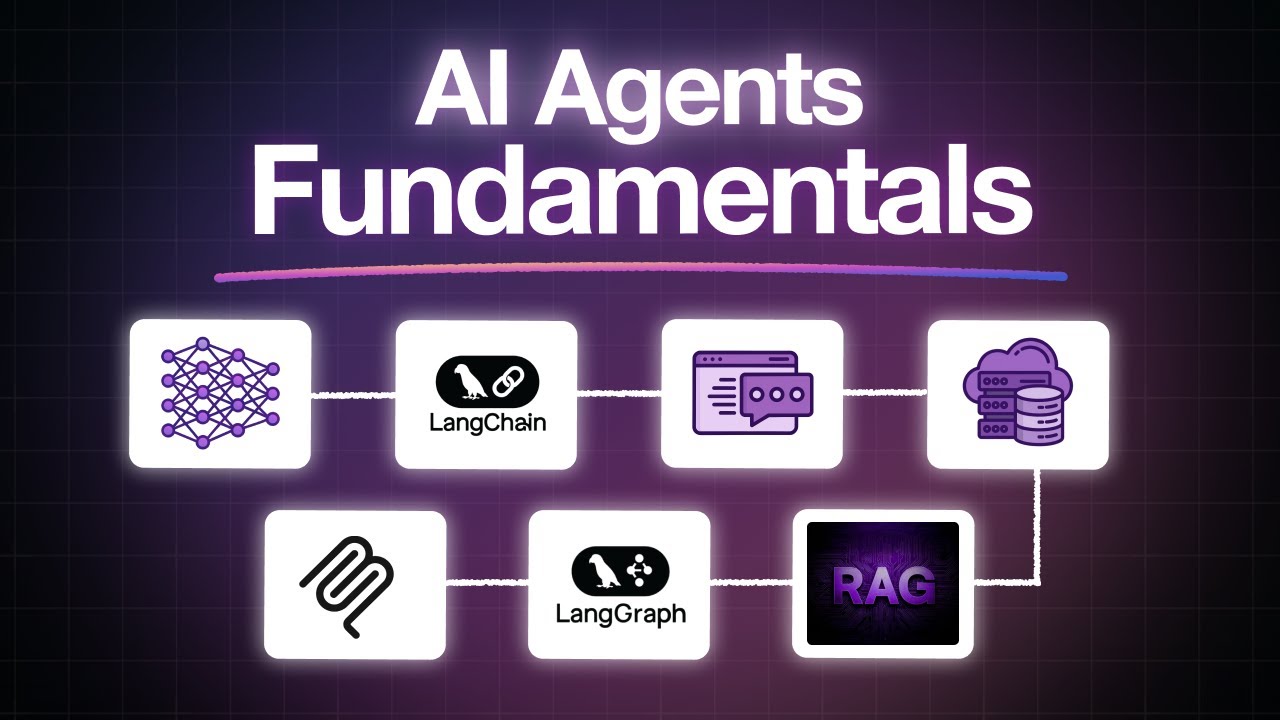




All Agentic AI Courses
Browse all courses in Agentic AI.

Mastering AI-Driven Development with OpenAI Codex: From Setup to Autonomous Agents
Master OpenAI Codex to build, manage, and deploy applications using autonomous AI agents. Learn to set up workspaces, leverage git worktrees, configure Agents.md, and build three complete applications step-by-step from scratch.

Foundations of Web Development: Practical HTML for Beginners
Master the essentials of modern web development by learning HTML from scratch. In this practical guide, you will build structured, semantic web pages using headers, lists, links, images, tables, and forms, establishing a rock-solid foundation for your software development journey.

Java Programming Foundations: Master the Fundamentals of Software Development
Master Java programming fundamentals from scratch. Learn core concepts like variables, reference types, and control flow structures, then apply your skills by building a real-world Mortgage Calculator. This course establishes a solid foundation in software development and clean coding principles.

LLM App Development: Building Powered Applications with LangChain
Master the fundamentals of LangChain to build LLM-powered applications. This beginner-friendly course guides you through prompt templates, chains, agents, conversational memory, and document loaders using Python and OpenAI.
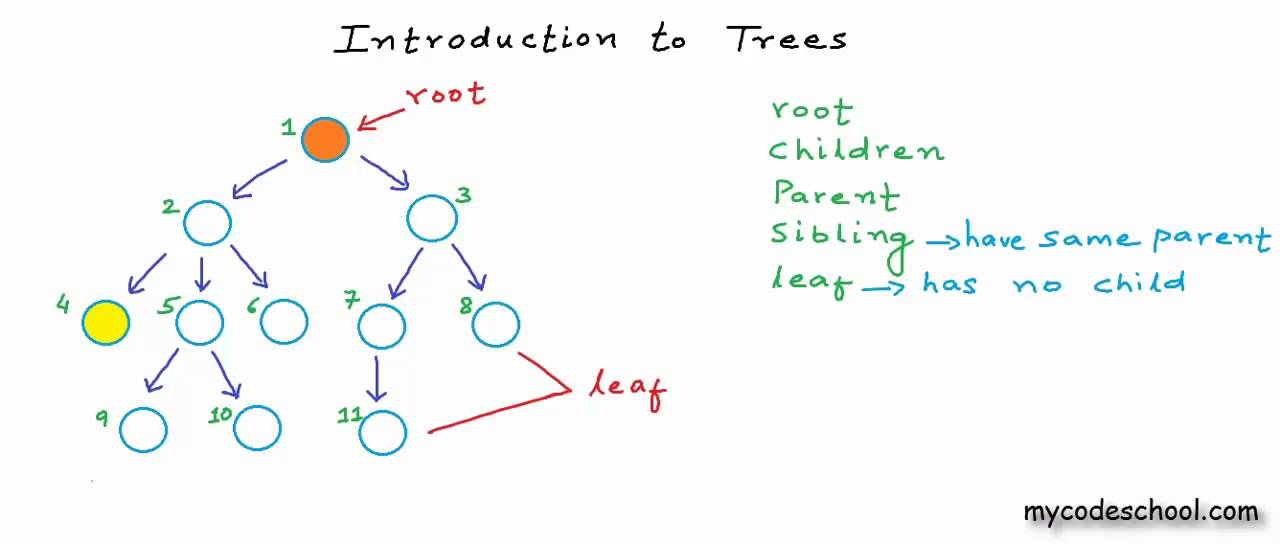
Demystifying Trees: Foundations of Hierarchical Data Structures
Dive into non-linear data structures with this introductory guide to trees. Learn essential terminology, structural properties, and real-world applications to elevate your programming and algorithmic thinking.

Mastering Binary Search: Efficient Search Algorithms for Coding Interviews
Master the binary search algorithm to solve lookup problems in logarithmic time. Learn to implement iterative and recursive approaches, analyze time complexity, and apply this fundamental search technique to excel in technical coding interviews.

Visualizing Eigenvalues and Eigenvectors: The Essence of Linear Algebra
Master the visual intuition behind eigenvectors and eigenvalues. Learn how linear transformations stretch space, how to calculate eigenvalues, and why an eigenbasis is crucial for simplifying complex computations in physics, machine learning, and high-dimensional vector databases.

Applied Linear Algebra: Real-World Applications of Matrices
Explore the practical power of matrices and linear algebra. Learn how these mathematical tools drive computer graphics, Google's PageRank algorithm, physics simulations, and modern data science.

Building AI-Powered Automation Systems with Codex
Master Codex to build a fully functional YouTube comment intelligence system. Learn to configure APIs, design interactive dashboards, build reusable skills, deploy with GitHub and Vercel, and implement automated browser QA workflows.

Sliding Window Mastery: Accelerating Coding Interview Prep
Master the sliding window algorithm to solve complex subarray and substring problems efficiently. Learn to transition from brute-force O(N^2) to optimal O(N) time complexity, preparing you to ace competitive programming and top-tier technical interviews with confidence.
Popular Channels
Discover the best YouTube creators in this space.


Learn from the Best
Top educators from YouTube, all in one place.

Caleb Curry
@codebreakthroughProgramming Made Fun and Simple Business inquiries: calebcurry@kernelmanagement.com High quality tutorials that are fun, educational, and easy to follow. Teaching programming is my passion! I find joy in making complex material easy to understand. As an Amazon Associate I earn from qualifying purchases.

Coder Army
@coderarmy9Hi Coder, We are on a mission to create Best Coder in our Country and for that we are putting best content for Students. I am Rohit Negi who graduated from IIT Guwahati and got Highest Placement in India in 2021. I got AIR 202 in GATE CSE in 2020. Brand Collaboration: rohitnegi.business9@gmail.com

freeCodeCamp.org
@freecodecampLearn math, programming, and computer science for free. A 501(c)(3) tax-exempt charity. We also run a free learning interactive platform at freecodecamp.org
Didn't find what you were looking for?
Explore other topics or browse all courses to find exactly what you're looking for.