
Explore Java
Java is a versatile, high-level, class-based, and object-oriented programming language designed to have as few implementation dependencies as possible. Since its inception, Java has become one of the most popular programming languages in the world, powering billions of devices, including smartphones, enterprise servers, desktop computers, and embedded systems.
29
Courses
19
Learners
Introduction to Java
Java is a versatile, high-level, class-based, and object-oriented programming language designed to have as few implementation dependencies as possible. Since its inception, Java has become one of the most popular programming languages in the world, powering billions of devices, including smartphones, enterprise servers, desktop computers, and embedded systems.
The core philosophy of Java is summarized by the famous acronym WORA: "Write Once, Run Anywhere." This means that compiled Java code can run on all platforms that support Java without the need for recompilation.
History and Evolution
Java was initiated by James Gosling, Mike Sheridan, and Patrick Naughton at Sun Microsystems in June 1991. Initially designed for interactive television, the technology was too advanced for the digital cable television industry of the time.
- The Name: Originally called Oak (after the oak tree outside Gosling's office), it was later renamed Green, and finally Java, inspired by the large consumption of Java coffee by the development team.
- Release: Sun Microsystems released the first public implementation as Java 1.0 in 1996.
- Acquisition: In 2010, Oracle Corporation acquired Sun Microsystems, taking over the stewardship of Java.
- Modern Release Cadence: Today, Oracle releases new feature versions of Java every six months (in March and September), alongside Long-Term Support (LTS) releases every few years to ensure enterprise stability.
Core Features of Java
Java's enduring popularity is due to several foundational features built into the language:
1. Platform Independence
Unlike languages like C or C++, which compile into platform-specific machine code, Java compiles into an intermediate format called Bytecode. This bytecode is executed by the Java Virtual Machine (JVM), which acts as a translator between the bytecode and the underlying operating system.
2. Object-Oriented Programming (OOP)
Except for primitive data types, everything in Java is an object. Java strictly adheres to OOP concepts, which organize software design around data, or objects, rather than functions and logic.
3. Robustness and Memory Management
Java emphasizes early error checking, compile-time checking, and runtime checking. One of its most robust features is Automatic Garbage Collection, which automatically deallocates memory when objects are no longer in use, preventing memory leaks.
4. Security
Java was designed with security in mind. It runs inside a secure virtual machine sandbox, preventing unauthorized access to system resources. Additionally, Java does not support explicit pointers, reducing the risk of unauthorized memory access and buffer overflow vulnerabilities.
5. Multithreading
Java has built-in support for multithreading, allowing programs to perform multiple tasks concurrently. This is highly beneficial for developing highly interactive and responsive applications, particularly in web and enterprise environments.
The Java Architecture: JDK, JRE, and JVM
To understand how Java works, it is essential to understand its three core components:
+---------------------------------------------------------+
| JDK (Java Development Kit)                              |
|   +-------------------------------------------------+   |
|   | JRE (Java Runtime Environment)                  |   |
|   |   +-----------------------------------------+   |   |
|   |   | JVM (Java Virtual Machine)              |   |   |
|   |   | - Executes Bytecode                     |   |   |
|   |   +-----------------------------------------+   |   |
|   |   - Core Libraries & Classes                |   |   |
|   +-------------------------------------------------+   |
|   - Development Tools (javac, jar, jdb, etc.)           |
+---------------------------------------------------------+
Java Virtual Machine (JVM)
The JVM is the engine that drives the Java code. It converts Java bytecode into machine language. The JVM is platform-dependent; different JVM implementations exist for Windows, macOS, Linux, etc., but they all execute the same bytecode.
Java Runtime Environment (JRE)
The JRE is the software package that provides the minimum requirements for executing a Java application. It contains the JVM, core classes, and supporting files. It does not contain development tools like compilers or debuggers.
Java Development Kit (JDK)
The JDK is a full-featured software development kit containing everything in the JRE, plus tools required to develop, compile, and debug Java applications (such as the compiler javac and the archiver jar).
Fundamental Concepts in Java
Syntax and Structure
Java syntax is heavily influenced by C and C++. Below is a classic "Hello, World!" program in Java:
public class HelloWorld {
    public static void main(String[] args) {
        System.out.println("Hello, World!");
    }
}
public class HelloWorld: In Java, all code must reside inside a class. The class name must match the filename (e.g.,HelloWorld.java).public static void main(String[] args): This is the entry point of any Java program. The JVM looks for this method to begin execution.System.out.println(): This statement prints the specified text to the standard output console.
The Four Pillars of OOP
Java implements the four primary concepts of Object-Oriented Programming:
- Encapsulation: Wrapping data (variables) and code (methods) together as a single unit, restricting direct access to some components using access modifiers (
private,protected,public). - Inheritance: Allowing a new class (subclass) to inherit properties and behaviors from an existing class (superclass), promoting code reusability.
- Polymorphism: The ability of a single interface or method to take on multiple forms. This is achieved through method overloading (compile-time) and method overriding (runtime).
- Abstraction: Hiding complex implementation details and showing only the essential features of an object using abstract classes and interfaces.
Java Ecosystem and Modern Use Cases
Java remains a dominant force across various sectors of the technology industry:
- Enterprise Applications: Java is the backbone of large-scale enterprise systems, particularly in banking, insurance, and retail. Frameworks like Spring Boot and Jakarta EE simplify the creation of secure, scalable microservices.
- Android App Development: Although Kotlin is now preferred by Google, Java remains widely used for Android application development, and millions of legacy Android apps are written in Java.
- Big Data: Many major big data technologies, such as Apache Hadoop, Apache Spark, and Apache Cassandra, are written in or heavily support Java.
- Cloud Computing: Java's portability and scalability make it a popular choice for cloud-native applications deployed on AWS, Google Cloud, and Microsoft Azure.
Topic Overview
- 29 Courses available
- 19 Active learners
Featured Courses
Top picks hand-selected by our team for Java.




All Java Courses
Browse all courses in Java.

Mastering Data Structures and Algorithms in Java: From Big O to Interview Success
Master essential data structures and algorithms in Java to ace technical coding interviews. Learn Big O complexity, dynamic programming, trees, graphs, and algorithmic patterns through comprehensive problem-solving techniques.

Enterprise Java Backend with Spring Framework & Spring Boot: From First Principles to Production
Master enterprise Java backend engineering with Spring Framework and Spring Boot. Learn IoC, dependency injection, Spring MVC, Hibernate, JPA transactions, JWT authentication, OAuth 2.0, and automated testing from first principles to build production-grade web applications.

Mastering AI-Driven Development with OpenAI Codex: From Setup to Autonomous Agents
Master OpenAI Codex to build, manage, and deploy applications using autonomous AI agents. Learn to set up workspaces, leverage git worktrees, configure Agents.md, and build three complete applications step-by-step from scratch.

Foundations of Web Development: Practical HTML for Beginners
Master the essentials of modern web development by learning HTML from scratch. In this practical guide, you will build structured, semantic web pages using headers, lists, links, images, tables, and forms, establishing a rock-solid foundation for your software development journey.
Java Programming Foundations: Master the Fundamentals of Software Development
Master Java programming fundamentals from scratch. Learn core concepts like variables, reference types, and control flow structures, then apply your skills by building a real-world Mortgage Calculator. This course establishes a solid foundation in software development and clean coding principles.

LLM App Development: Building Powered Applications with LangChain
Master the fundamentals of LangChain to build LLM-powered applications. This beginner-friendly course guides you through prompt templates, chains, agents, conversational memory, and document loaders using Python and OpenAI.
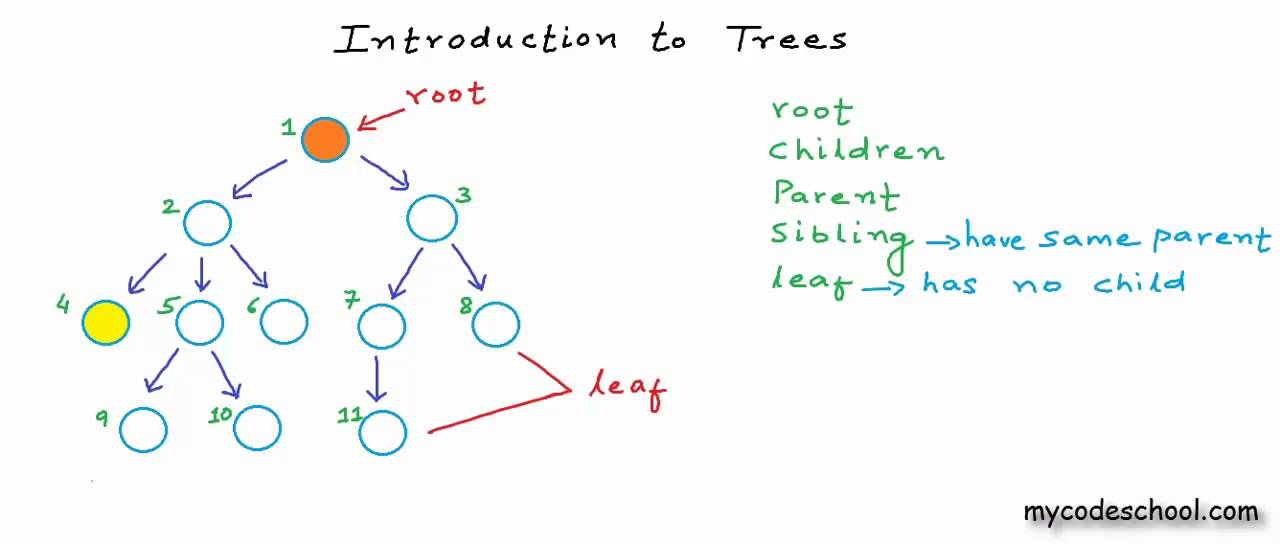
Demystifying Trees: Foundations of Hierarchical Data Structures
Dive into non-linear data structures with this introductory guide to trees. Learn essential terminology, structural properties, and real-world applications to elevate your programming and algorithmic thinking.

Mastering Binary Search: Efficient Search Algorithms for Coding Interviews
Master the binary search algorithm to solve lookup problems in logarithmic time. Learn to implement iterative and recursive approaches, analyze time complexity, and apply this fundamental search technique to excel in technical coding interviews.

Applied Linear Algebra: Real-World Applications of Matrices
Explore the practical power of matrices and linear algebra. Learn how these mathematical tools drive computer graphics, Google's PageRank algorithm, physics simulations, and modern data science.
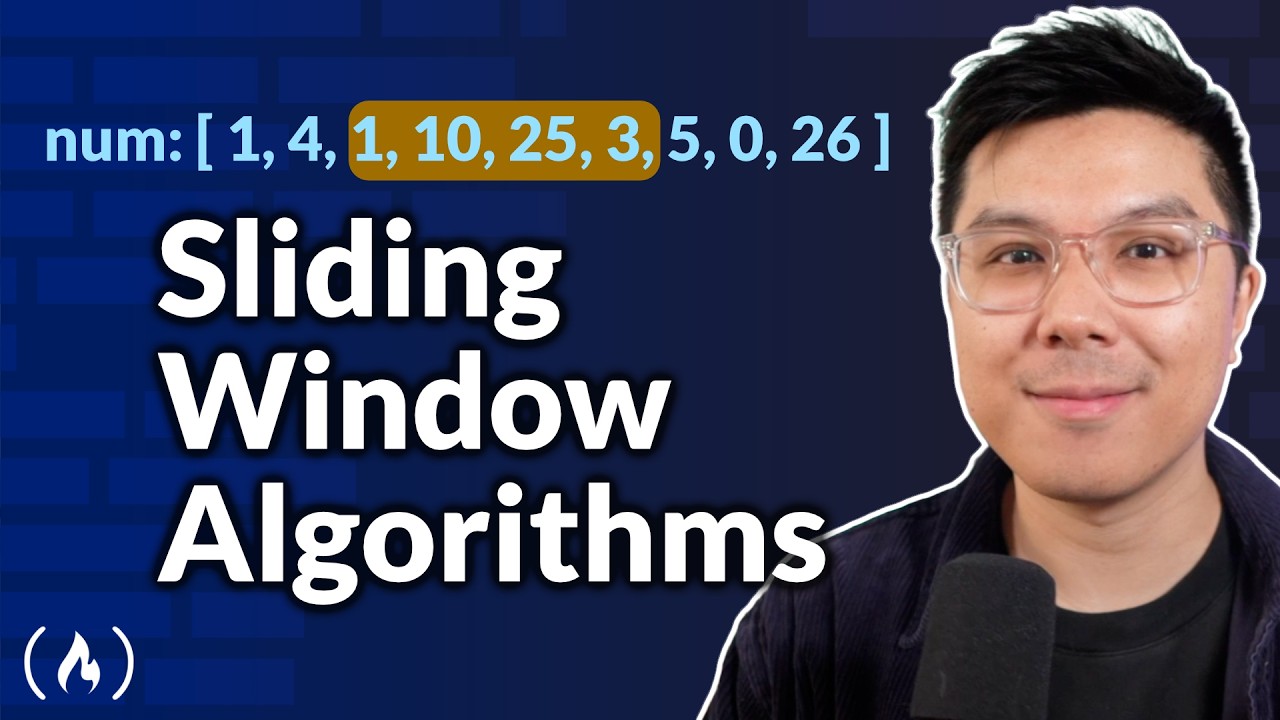
Sliding Window Mastery: Accelerating Coding Interview Prep
Master the sliding window algorithm to solve complex subarray and substring problems efficiently. Learn to transition from brute-force O(N^2) to optimal O(N) time complexity, preparing you to ace competitive programming and top-tier technical interviews with confidence.
Popular Channels
Discover the best YouTube creators in this space.


Learn from the Best
Top educators from YouTube, all in one place.

Caleb Curry
@codebreakthroughProgramming Made Fun and Simple Business inquiries: calebcurry@kernelmanagement.com High quality tutorials that are fun, educational, and easy to follow. Teaching programming is my passion! I find joy in making complex material easy to understand. As an Amazon Associate I earn from qualifying purchases.

Coder Army
@coderarmy9Hi Coder, We are on a mission to create Best Coder in our Country and for that we are putting best content for Students. I am Rohit Negi who graduated from IIT Guwahati and got Highest Placement in India in 2021. I got AIR 202 in GATE CSE in 2020. Brand Collaboration: rohitnegi.business9@gmail.com

freeCodeCamp.org
@freecodecampLearn math, programming, and computer science for free. A 501(c)(3) tax-exempt charity. We also run a free learning interactive platform at freecodecamp.org
Didn't find what you were looking for?
Explore other topics or browse all courses to find exactly what you're looking for.