
Explore vector-databases
Master vector databases to power next-generation AI applications. Explore courses on vector search, high-dimensional embeddings, semantic retrieval, and building RAG pipelines with modern database architectures.
6
Courses
8
Learners
What Are Vector Databases?␍
␍ Vector databases are specialized data storage and retrieval systems engineered to manage high-dimensional vector embeddings. Unlike traditional relational databases that query structured rows using exact matching, or document stores that index keywords, vector databases are purpose-built to index, store, and query mathematical representations of unstructured data such as text, images, audio, and video.␍ ␍ In the era of modern machine learning and large language models (LLMs), deep neural networks convert complex multimodal data into dense vectors—arrays of floating-point numbers that capture deep semantic relationships. Vector databases leverage specialized indexing algorithms to perform similarity searches across millions or billions of these vectors in milliseconds, identifying data points that share contextual meaning rather than identical syntax.␍ ␍ Today, vector databases serve as the foundational long-term memory for intelligent agentic workflows and retrieval-augmented generation (RAG) architectures. Whether running dedicated solutions like Milvus, Pinecone, and Qdrant, or utilizing integrated vector engines within systems like MongoDB Atlas Vector Search and PostgreSQL with pgvector, understanding vector databases is critical for building scalable AI software.␍ ␍
Why Learn Vector Databases?␍
␍ As organizations increasingly adopt generative AI, the demand for developers and data engineers proficient in semantic search has skyrocketed. Learning vector databases allows you to:␍ ␍
- Build Production-Grade RAG Systems: Ground large language models with dynamic, private domain knowledge to eliminate hallucinations and deliver accurate, context-rich responses.␍
- Power Semantic Search and Recommendation Engines: Move beyond rigid keyword matching to build intuitive search engines and personalized recommendation systems that understand user intent.␍
- Enable Autonomous AI Agents: Equip autonomous agents with persistent memory and contextual retrieval, allowing them to track user preferences, execute complex plans, and reason over vast knowledge bases.␍
- Future-Proof Your Database Skill Set: Combine traditional database administration with vector indexing, preparing your infrastructure for modern AI workloads.␍ ␍
Key Concepts in Vector Search␍
␍
- Vector Embeddings: High-dimensional numerical arrays generated by machine learning models that encode the semantic meaning of data points.␍
- Distance Metrics: Mathematical formulas—such as Cosine Similarity, Euclidean Distance (L2), and Dot Product—used to measure how close two vectors are in high-dimensional space.␍
- Approximate Nearest Neighbor (ANN): Algorithmic strategies that trade a negligible degree of precision for dramatic speed improvements when querying massive datasets.␍
- Vector Indexing Structures: Specialized graph- and tree-based data structures like HNSW (Hierarchical Navigable Small World) and IVF (Inverted File Index) that organize vectors for rapid traversal.␍
- Hybrid Search: A retrieval approach that combines traditional keyword-based BM25 search with dense vector similarity search to produce optimal ranking results.␍ ␍
Who Is This For?␍
␍ This learning track is designed for software engineers, data scientists, AI engineers, and backend developers looking to bridge the gap between machine learning models and production storage layers. Whether you are transitioning from traditional SQL/NoSQL databases or architecting multi-agent AI systems from scratch, these courses provide practical, hands-on expertise in indexing, query optimization, and vector search architecture.
Sub-Category Overview
- 6 Courses available
- 8 Active learners
Featured Courses
Top picks hand-selected by our team for vector-databases.
All vector-databases Courses
Browse all courses in vector-databases.
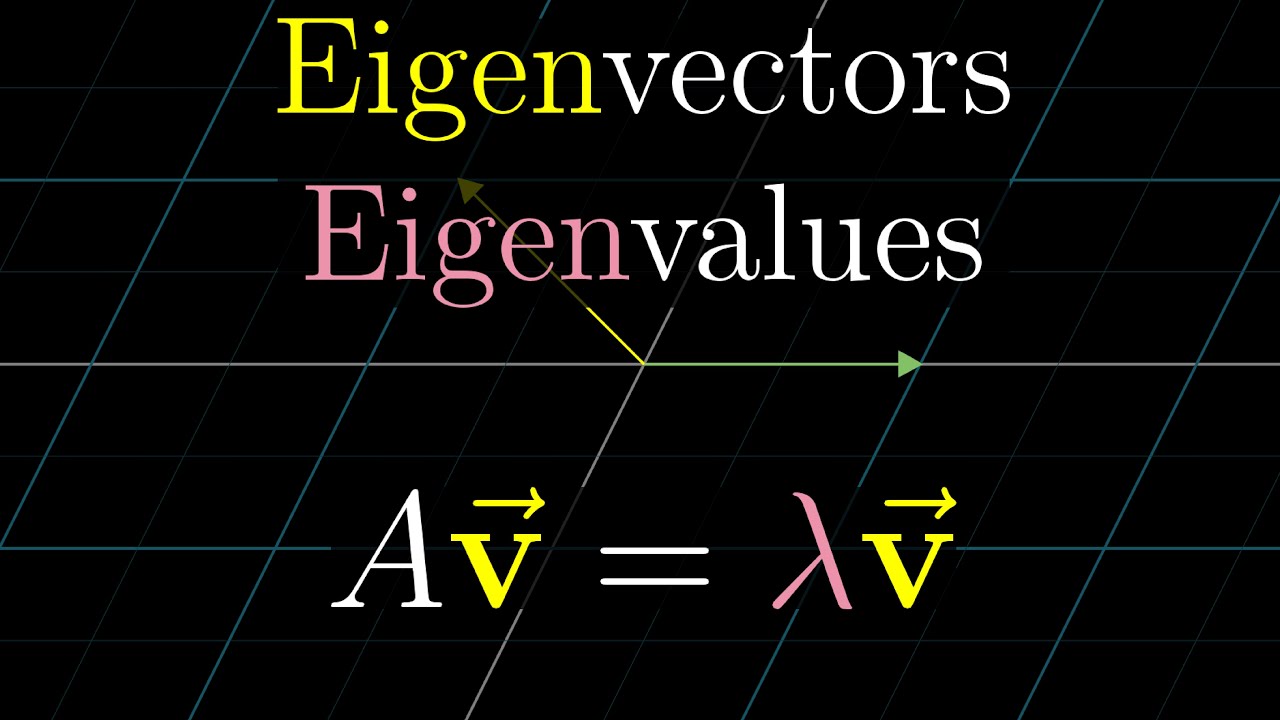
Visualizing Eigenvalues and Eigenvectors: The Essence of Linear Algebra
Master the visual intuition behind eigenvectors and eigenvalues. Learn how linear transformations stretch space, how to calculate eigenvalues, and why an eigenbasis is crucial for simplifying complex computations in physics, machine learning, and high-dimensional vector databases.
Mastering AWS Cloud Foundations: CLF-C02 Certification Prep
Master core AWS services, cloud security, architecture, and billing models to ace the AWS Certified Cloud Practitioner (CLF-C02) exam. This comprehensive, structured guide provides foundational cloud knowledge, practical service overviews, and key exam preparation strategies for success.
Building Intelligent AI Agents with Python and LangChain
Master the LangChain Python framework to build intelligent, autonomous AI agents. Learn to implement conversations, streaming, RAG with vector stores, dynamic prompts, and custom middleware for production-ready applications.
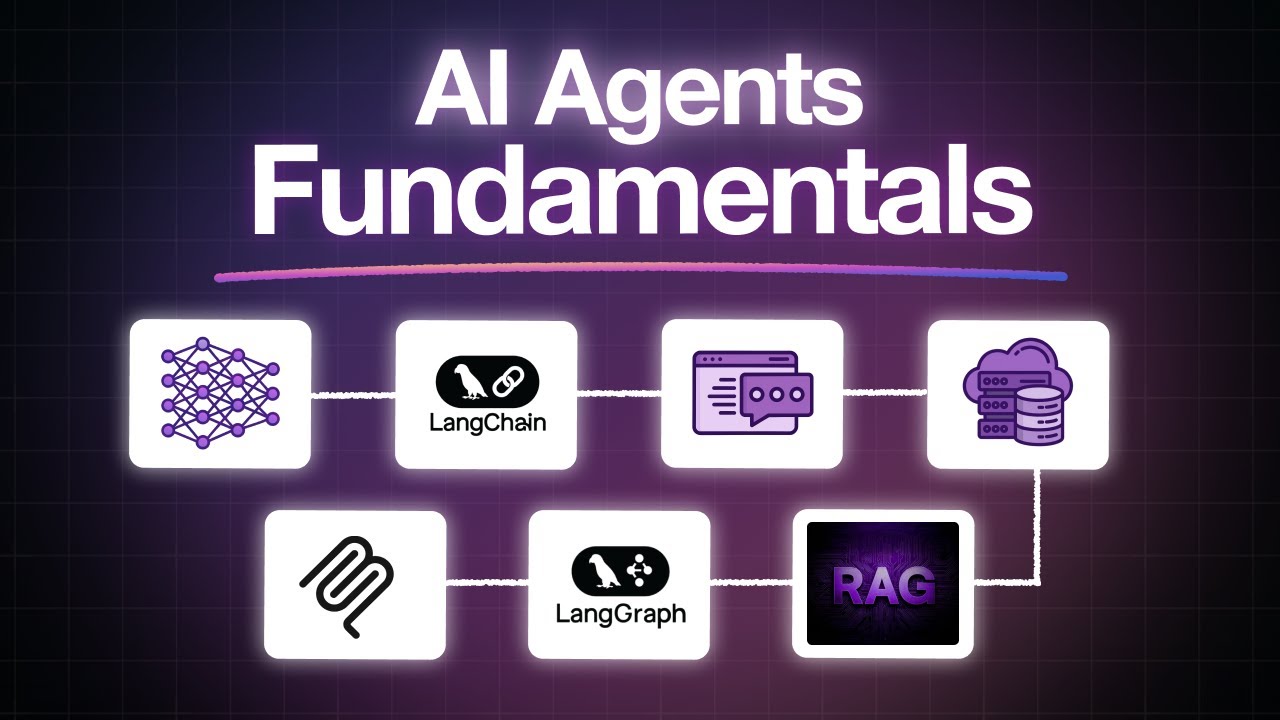
Architecting Production-Ready AI Agents: From LLM Fundamentals to Multi-Agent Workflows
Master the fundamentals of AI agents, LangChain, vector databases, and RAG. Learn to build stateful multi-agent workflows with LangGraph and integrate external tools using the Model Context Protocol (MCP) through hands-on labs.

Production-Ready AI Agents with Python: From Foundations to Agentic Systems
Master Python for AI development, build reliable AI agents from first principles, implement high-performance hybrid search RAG pipelines, and establish systematic LLM evaluations for production-grade systems.

Mastering MongoDB: From NoSQL Foundations to Advanced Aggregation and Vector Search
Master MongoDB from scratch. Learn document-based NoSQL database design, CRUD operations, indexing, and aggregation pipelines. You will also explore modern vector database concepts, including vector embeddings and similarity search, to prepare you for building AI-powered applications.
Popular Channels
Discover the best YouTube creators in this space.


Learn from the Best
Top educators from YouTube, all in one place.

Caleb Curry
@codebreakthroughProgramming Made Fun and Simple Business inquiries: calebcurry@kernelmanagement.com High quality tutorials that are fun, educational, and easy to follow. Teaching programming is my passion! I find joy in making complex material easy to understand. As an Amazon Associate I earn from qualifying purchases.

Coder Army
@coderarmy9Hi Coder, We are on a mission to create Best Coder in our Country and for that we are putting best content for Students. I am Rohit Negi who graduated from IIT Guwahati and got Highest Placement in India in 2021. I got AIR 202 in GATE CSE in 2020. Brand Collaboration: rohitnegi.business9@gmail.com

freeCodeCamp.org
@freecodecampLearn math, programming, and computer science for free. A 501(c)(3) tax-exempt charity. We also run a free learning interactive platform at freecodecamp.org
Didn't find what you were looking for?
Explore other sub-categories or browse all courses to find exactly what you're looking for.