
Explore Devops
DevOps is a synthesis of Development (Dev) and Operations (Ops). Rather than being a single software tool, a job title, or a specific technology, DevOps is a cultural philosophy, a set of practices, and a collaborative movement. It is designed to break down the traditional silos between software development teams and IT operations teams, enabling organizations to deliver applications and services at high velocity.
8
Sub-Topics
14
Courses
7
Learners
Understanding DevOps: Philosophy, Practices, and Tools
DevOps is a synthesis of Development (Dev) and Operations (Ops). Rather than being a single software tool, a job title, or a specific technology, DevOps is a cultural philosophy, a set of practices, and a collaborative movement. It is designed to break down the traditional silos between software development teams and IT operations teams, enabling organizations to deliver applications and services at high velocity.
Before DevOps, developers wrote code and "threw it over the wall" to operations teams for deployment and maintenance. This siloed approach often led to friction, slow deployment cycles, and unstable production environments. DevOps bridges this gap, creating a shared responsibility model where both teams collaborate across the entire software application lifecycle—from design and development to deployment and production support.
The Core Pillars of DevOps (The CALMS Framework)
To successfully adopt DevOps, organizations often look to the CALMS framework, coined by Jez Humble and expanded by industry leaders:
- Culture: DevOps starts with people. It requires a shift toward mutual trust, shared responsibility, and a willingness to experiment and learn from failures (blameless post-mortems).
- Automation: Eliminating manual, repetitive tasks is crucial. Automation speeds up processes, reduces human error, and ensures consistency across environments.
- Lean: Drawing from lean manufacturing principles, this involves minimizing waste, working in small batch sizes, and focusing on delivering value to the end-user as quickly as possible.
- Measurement: You cannot improve what you do not measure. DevOps organizations collect data on deployment frequency, change failure rates, mean time to recovery (MTTR), and user satisfaction.
- Sharing: Open communication and sharing ideas, tools, and experiences across teams foster collaboration and break down organizational silos.
The DevOps Lifecycle
The DevOps lifecycle is continuous and iterative, often visualized as an infinity loop. This loop signifies that software development, deployment, and feedback are ongoing processes.
1. Plan
In this initial phase, teams define business requirements, gather feedback from stakeholders, and plan the project roadmap. Agile methodologies are commonly used here to break projects down into manageable tasks (epics, user stories).
2. Code
Developers write and review code. They use version control systems to manage changes, collaborate on codebases, and ensure that multiple developers can work on the same project without conflicts.
3. Build
Once code is committed, it is compiled into deployable artifacts (such as binaries, Docker images, or executable packages). Automated build tools ensure that this process is consistent and repeatable.
4. Test
Automated testing is executed against the build to identify bugs, security vulnerabilities, and performance bottlenecks early. This includes unit tests, integration tests, and security scans.
5. Release
The release phase involves preparing the tested build for deployment. In a mature DevOps pipeline, this stage is highly automated, ensuring that the software is ready to go live at any moment.
6. Deploy
The software is deployed to the production environment. Deployment strategies like blue-green deployments or canary releases are often used to minimize downtime and risk.
7. Operate
The operations team manages the active software in the production environment. This includes scaling resources, managing cloud infrastructure, and ensuring high availability.
8. Monitor
Continuous monitoring tracks application performance, system health, and user behavior. The insights gathered during this phase are fed back into the Plan phase, completing the loop.
Key DevOps Practices
To achieve the speed and reliability promised by DevOps, organizations implement several core technical practices:
Continuous Integration and Continuous Delivery (CI/CD)
- Continuous Integration (CI): Developers frequently merge their code changes into a central repository. Each merge triggers an automated build and test sequence to detect integration errors as early as possible.
- Continuous Delivery (CD): Code changes are automatically built, tested, and prepared for a release to production. Actual deployment to production may require manual approval.
- Continuous Deployment: An extension of continuous delivery where every change that passes all stages of the automated pipeline is released directly to production without human intervention.
Infrastructure as Code (IaC)
IaC is the practice of managing and provisioning infrastructure (servers, networks, storage) using machine-readable definition files rather than manual interactive configuration tools. This allows infrastructure to be version-controlled, tested, and replicated easily.
Microservices Architecture
Instead of building a single, massive "monolithic" application, developers build applications as a suite of small, independent services. Each service runs its own process and communicates with others via APIs. This makes applications easier to scale, update, and deploy independently.
Observability and Monitoring
Real-time monitoring and logging allow teams to see how application performance impacts the end-user experience. Observability goes beyond basic monitoring by helping teams understand why a system is behaving a certain way based on its external outputs (metrics, logs, and traces).
The DevOps Toolchain
Because DevOps spans the entire software lifecycle, it requires a suite of tools (often referred to as a "toolchain") to automate and streamline operations.
| Lifecycle Stage | Purpose | Popular Tools |
|---|---|---|
| Planning & Collaboration | Task tracking, documentation, and communication | Jira, Confluence, Slack, Trello |
| Source Code Management | Version control and collaborative coding | Git, GitHub, GitLab, Bitbucket |
| CI / CD | Automated building, testing, and deployment | Jenkins, GitHub Actions, GitLab CI, CircleCI |
| Containerization | Packaging applications with their dependencies | Docker, Podman |
| Orchestration | Managing clustered container environments | Kubernetes (K8s), Amazon ECS |
| Infrastructure as Code | Provisioning and managing infrastructure via code | Terraform, Ansible, Pulumi, CloudFormation |
| Monitoring & Logging | Tracking system health and analyzing logs | Prometheus, Grafana, ELK Stack (Elasticsearch, Logstash, Kibana), Datadog |
Business and Technical Benefits of DevOps
Implementing DevOps practices yields significant advantages for both engineering teams and the broader business:
- Faster Time to Market: Automated pipelines allow organizations to release new features and bug fixes to customers in minutes or hours, rather than weeks or months.
- Improved Collaboration: Breaking down silos fosters a culture of shared goals, leading to happier, more productive, and more aligned teams.
- Higher Reliability: Continuous testing and monitoring ensure that code quality remains high, reducing the frequency of production outages.
- Rapid Recovery (MTTR): When failures do occur, automated rollbacks, robust monitoring, and infrastructure-as-code make it easy to restore services quickly.
- Scalability: Automation and cloud-native practices allow systems to scale seamlessly to meet changing user demands.
The Evolution of DevOps
As the industry matures, DevOps continues to evolve into specialized disciplines:
DevSecOps
DevSecOps integrates security practices directly into the DevOps lifecycle from the very beginning (often called "shifting security left"). Instead of treating security as an afterthought or a final gatekeeper, security checks are automated and embedded directly into the CI/CD pipeline.
Platform Engineering
As cloud environments grow more complex, Platform Engineering has emerged to design and build toolchains and workflows that enable self-service capabilities for software engineering teams. Platform engineers build an Internal Developer Platform (IDP) to reduce cognitive load on developers, allowing them to deploy code without needing to be experts in underlying infrastructure.
Topic Overview
- 14 Courses available
- 7 Active learners
Featured Courses
Top picks hand-selected by our team for Devops.

All Devops Courses
Browse all courses in Devops.

DevOps Zero to Hero: Practical Systems, CI/CD, and Cloud Engineering
Master modern DevOps from scratch. Learn SDLC, Linux Shell Scripting, Git, AWS, Terraform, Ansible, Docker, Jenkins CI/CD pipelines, and production-grade Kubernetes orchestration with real-world projects.
AWS Cloud DevOps Masters: Zero to Hero Production-Ready Architecture
Master AWS cloud engineering and DevOps practices. Learn to design, deploy, and automate secure, scalable, and cost-optimized infrastructures using VPC, EC2, IAM, EKS, CI/CD pipelines, and Infrastructure as Code.

Building AI-Powered Automation Systems with Codex
Master Codex to build a fully functional YouTube comment intelligence system. Learn to configure APIs, design interactive dashboards, build reusable skills, deploy with GitHub and Vercel, and implement automated browser QA workflows.
System Design & Containerization Masterclass: Building Scalable Distributed Systems
Master the fundamentals of scalable system design and containerization. Learn to design high-availability distributed systems, manage SQL/NoSQL databases, implement caching, and orchestrate services using Docker and Docker Compose to handle millions of users efficiently.

AI-Powered Product Design: Building and Deploying with Claude Design
Learn to design, prototype, and deploy a complete brand and web application from scratch using Claude Design and Claude Code. Master design systems, landing pages, mobile prototypes, and Vercel deployment.
Git and GitHub Foundations: Master Version Control and Collaboration
Master Git and GitHub from scratch. Learn essential version control concepts, local and remote workflows, branching strategies, undoing changes, and collaborative pull requests to streamline your software development lifecycle and confidently manage codebases.
Mastering AWS Cloud Foundations: CLF-C02 Certification Prep
Master core AWS services, cloud security, architecture, and billing models to ace the AWS Certified Cloud Practitioner (CLF-C02) exam. This comprehensive, structured guide provides foundational cloud knowledge, practical service overviews, and key exam preparation strategies for success.
The Complete Software Engineer's Career Guide: From Foundations to AI Agents
Accelerate your software engineering career by mastering computer science foundations, design patterns, testing, and DevOps with Docker. Then, leap into the future of software development by building stateful, multi-agent AI systems using LangGraph, Python, and LangChain.
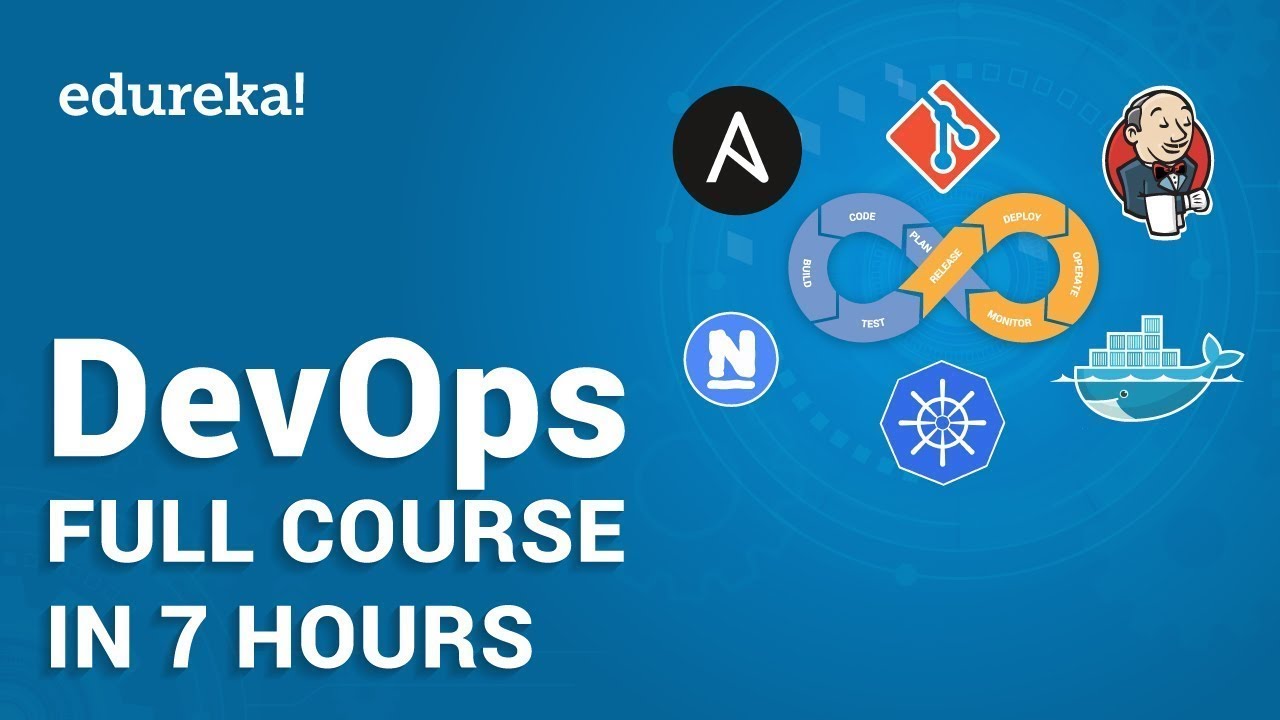
DevOps and Infrastructure Automation Bootcamp: From CI/CD to AI-Driven Workflows
Master the complete DevOps lifecycle using Git, Jenkins, Docker, Kubernetes, Ansible, Puppet, and Nagios. Learn to build automated CI/CD pipelines, manage containerized environments, and explore next-generation AI automation with LangGraph state graphs.
Mastering Jenkins: The Complete Beginner's Guide to CI/CD Automation
Master Jenkins from scratch to automate your software development lifecycle. This beginner-friendly course guides you through continuous integration (CI) and continuous delivery (CD), teaching you how to build, test, and deploy applications using Java, Git, and automation pipelines.
Popular Channels
Discover the best YouTube creators in this space.


Learn from the Best
Top educators from YouTube, all in one place.

Caleb Curry
@codebreakthroughProgramming Made Fun and Simple Business inquiries: calebcurry@kernelmanagement.com High quality tutorials that are fun, educational, and easy to follow. Teaching programming is my passion! I find joy in making complex material easy to understand. As an Amazon Associate I earn from qualifying purchases.

Coder Army
@coderarmy9Hi Coder, We are on a mission to create Best Coder in our Country and for that we are putting best content for Students. I am Rohit Negi who graduated from IIT Guwahati and got Highest Placement in India in 2021. I got AIR 202 in GATE CSE in 2020. Brand Collaboration: rohitnegi.business9@gmail.com

freeCodeCamp.org
@freecodecampLearn math, programming, and computer science for free. A 501(c)(3) tax-exempt charity. We also run a free learning interactive platform at freecodecamp.org
Didn't find what you were looking for?
Explore other topics or browse all courses to find exactly what you're looking for.