
Explore pytorch
Master PyTorch, the leading open-source deep learning framework developed by Meta AI. Explore hands-on courses covering tensor computation, neural network architectures, and building modern large language models from scratch.
2
Courses
7
Learners
What is PyTorch? PyTorch is an open-source deep learning and machine learning framework developed primarily by Meta's Fundamental AI Research (FAIR) lab. Built to provide seamless Python integration and high-performance computing, PyTorch has become the industry standard for research labs and production machine learning teams alike. At its core, the framework combines GPU-accelerated multidimensional tensor computations with an intuitive, dynamic computational graph. Unlike earlier static graph frameworks that required developers to define and compile an entire execution graph before feeding it data, PyTorch operates on an "eager execution" model via its dynamic graph system (Autograd). This design enables developers to write, debug, and inspect neural networks just like standard Python code, drastically lowering the barrier to experimentation and rapid prototyping. Today, PyTorch powers a vast ecosystem of artificial intelligence tooling, underpinning prominent foundational architectures such as Hugging Face Transformers, computer vision models, and generative audio systems. It serves as the bedrock for modern generative AI and large language model development. ## Why Learn PyTorch? PyTorch dominates current AI research and has established deep roots across enterprise engineering. Gaining proficiency in PyTorch equips you with the practical skills needed to design, train, and deploy sophisticated deep learning systems. Key benefits include: - Industry Standard for Generative AI: The vast majority of cutting-edge LLMs, vision transformers, and multimodal models are originally implemented and trained in PyTorch. - Pythonic and Intuitive Workflow: Writing code in PyTorch feels natural for Python developers. You can use standard control flow, standard debuggers like pdb, and standard profiling tools without friction. - Robust Production Ecosystem: Tools like TorchScript, torch.compile, and TensorRT integration bridge the gap between initial model research and optimized, low-latency production deployment. - High Career Relevance: PyTorch proficiency is one of the most frequently requested skills for AI engineers, machine learning researchers, and data scientists across tech organizations worldwide. ## Key Concepts - Tensors: The foundational data structure in PyTorch, similar to NumPy ndarrays but with native support for hardware acceleration on GPUs and TPUs. - Autograd (Automatic Differentiation): An engine that records computation graphs on the fly to calculate gradients automatically during the backward pass (loss.backward()). - torch.nn Module: PyTorch's neural network library providing building blocks such as linear layers, activation functions, loss metrics, and stateful containers. - DataLoaders and Datasets: Utilities that standardize dataset streaming, batching, shuffling, and multi-threaded data preprocessing pipelines. - Distributed Training: Native libraries such as DistributedDataParallel (DDP) and Fully Sharded Data Parallel (FSDP) that scale model training across clusters of distributed GPUs. ## Who is This For? This tag is designed for software engineers, data analysts, and aspiring machine learning practitioners looking to move beyond black-box APIs into foundational deep learning. Whether you are aiming to construct custom transformer architectures from scratch, fine-tune existing foundation models using parameter-efficient techniques, or optimize complex neural networks for production, mastering PyTorch provides the essential toolkit to bring your AI initiatives to life.
Sub-Category Overview
- 2 Courses available
- 7 Active learners
Featured Courses
Top picks hand-selected by our team for pytorch.
All pytorch Courses
Browse all courses in pytorch.
Deep Dive into LLMs: Building and Training GPT Models from Scratch
Master the inner workings of Large Language Models by coding a complete GPT-style architecture from scratch. Learn tokenization, multi-head attention, pretraining, and supervised fine-tuning using PyTorch and Python. Build, train, and align your own deep learning models.
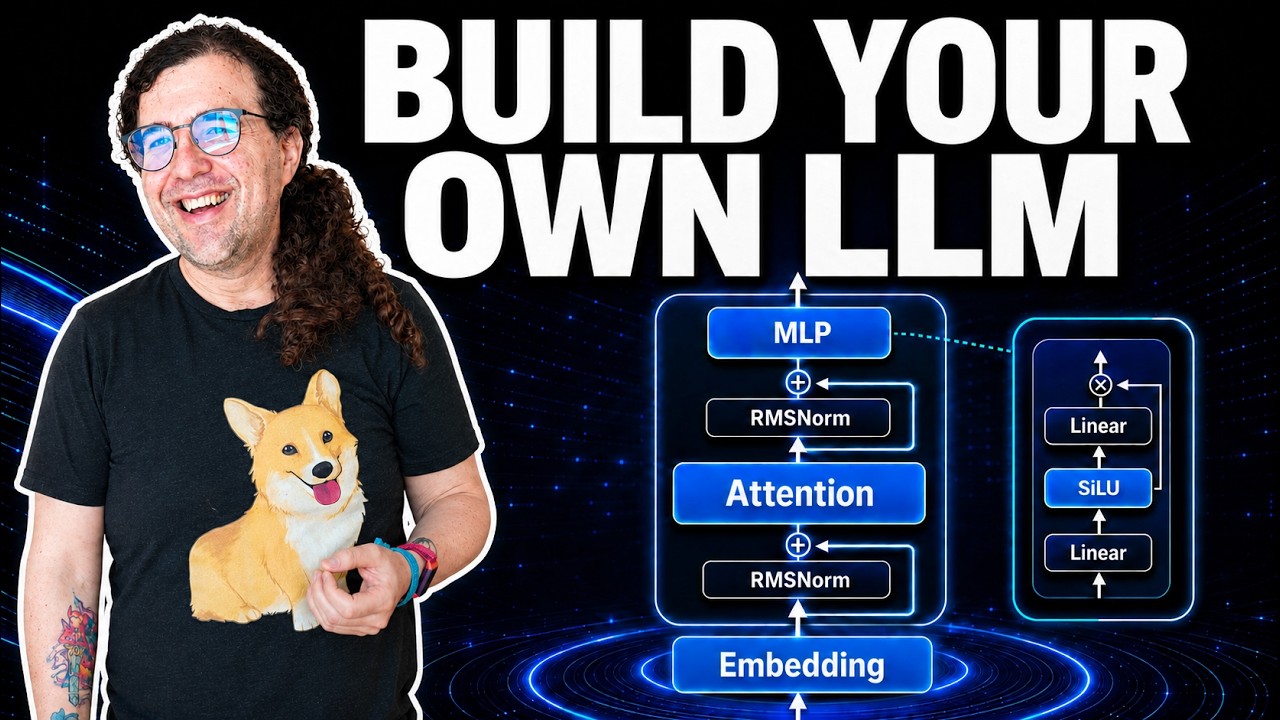
Architecting Large Language Models from Scratch: From Perceptrons to Post-Training
Master the inner workings of LLMs by building a GPT-2-style transformer from scratch. Learn neural network fundamentals, GPU optimization, attention mechanisms, pre-training pipelines, instruction tuning, and policy optimization using PyTorch.
Popular Channels
Discover the best YouTube creators in this space.


Learn from the Best
Top educators from YouTube, all in one place.

Caleb Curry
@codebreakthroughProgramming Made Fun and Simple Business inquiries: calebcurry@kernelmanagement.com High quality tutorials that are fun, educational, and easy to follow. Teaching programming is my passion! I find joy in making complex material easy to understand. As an Amazon Associate I earn from qualifying purchases.

Coder Army
@coderarmy9Hi Coder, We are on a mission to create Best Coder in our Country and for that we are putting best content for Students. I am Rohit Negi who graduated from IIT Guwahati and got Highest Placement in India in 2021. I got AIR 202 in GATE CSE in 2020. Brand Collaboration: rohitnegi.business9@gmail.com

freeCodeCamp.org
@freecodecampLearn math, programming, and computer science for free. A 501(c)(3) tax-exempt charity. We also run a free learning interactive platform at freecodecamp.org
Didn't find what you were looking for?
Explore other sub-categories or browse all courses to find exactly what you're looking for.