Explore monitoring
Master the art of system observability and monitoring with our expert-led courses. Learn to track performance metrics, set up alerts, and ensure maximum uptime for modern applications.
2
Courses
0
Learners
What is monitoring?
Monitoring is the continuous process of collecting, aggregating, and analyzing real-time data from software applications, servers, and infrastructure. It allows engineering and operations teams to track key performance indicators (KPIs), resource utilization, and application health. By establishing baselines for normal behavior, teams can quickly identify anomalies, latency spikes, and infrastructure failures before they impact end users.
In modern software engineering, monitoring goes beyond simple uptime checks. It encompasses comprehensive observability strategies that include metrics, logs, and traces. As cloud environments grow more complex with microservices, containerization, and distributed systems, robust monitoring practices ensure that system administrators maintain visibility across every layer of the technology stack.
Why Learn monitoring?
Learning monitoring is essential for any professional working in DevOps, site reliability engineering (SRE), or cloud architecture. Modern organizations demand high availability and resilient systems, making professionals who can configure advanced monitoring stacks exceptionally valuable. By mastering monitoring tools like Prometheus, Grafana, and Datadog, you empower teams to troubleshoot issues faster, optimize cloud resource expenditures, and maintain reliable service-level agreements (SLAs).
Furthermore, understanding observability bridges the gap between development and operations. When developers build applications with monitoring in mind, they write more maintainable code and provide better telemetry data. This capability directly translates to accelerated career growth, higher earning potential, and the ability to lead critical infrastructure projects.
Key Concepts
- Metrics: Quantitative data points measured over time, such as CPU utilization, memory consumption, and request error rates.
- Logs: Immutable, timestamped records of discrete events that occur within an application or operating system.
- Distributed Tracing: The practice of tracking the lifecycle and journey of a single request as it propagates across multiple microservices and databases.
- Alerting: Automated notification mechanisms that trigger warnings or pages when defined thresholds or anomalies are detected.
- Dashboards: Visual user interfaces that aggregate metrics and logs into cohesive charts and graphs for real-time analysis.
Who is This For?
This page is designed for software engineers, DevOps practitioners, system administrators, and cloud architects who want to deepen their operational expertise. Whether you are transitioning into a reliability engineering role or looking to scale enterprise-grade distributed systems, our curated selection of courses provides the practical training you need to succeed.
Sub-Category Overview
- 2 Courses available
- 0 Active learners
All monitoring Courses
Browse all courses in monitoring.

DevOps Zero to Hero: Practical Systems, CI/CD, and Cloud Engineering
Master modern DevOps from scratch. Learn SDLC, Linux Shell Scripting, Git, AWS, Terraform, Ansible, Docker, Jenkins CI/CD pipelines, and production-grade Kubernetes orchestration with real-world projects.
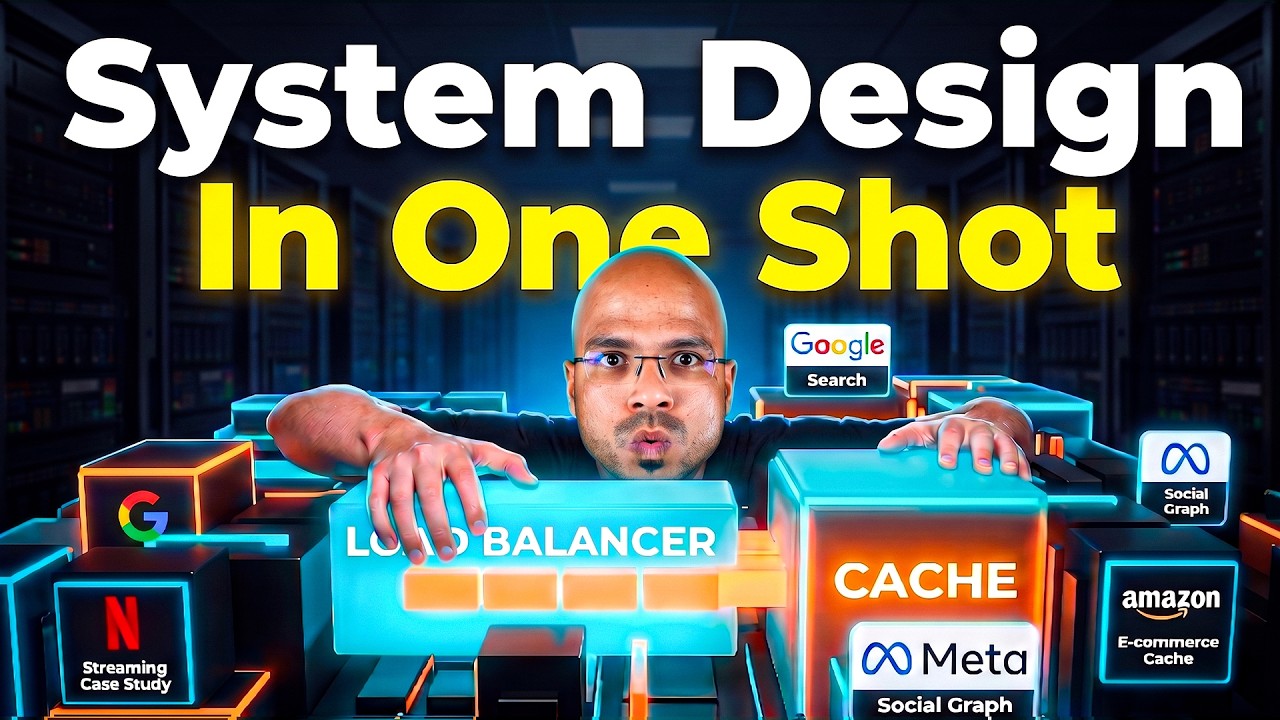
System Design & Containerization Masterclass: Building Scalable Distributed Systems
Master the fundamentals of scalable system design and containerization. Learn to design high-availability distributed systems, manage SQL/NoSQL databases, implement caching, and orchestrate services using Docker and Docker Compose to handle millions of users efficiently.
Popular Channels
Discover the best YouTube creators in this space.


Learn from the Best
Top educators from YouTube, all in one place.

Caleb Curry
@codebreakthroughProgramming Made Fun and Simple Business inquiries: calebcurry@kernelmanagement.com High quality tutorials that are fun, educational, and easy to follow. Teaching programming is my passion! I find joy in making complex material easy to understand. As an Amazon Associate I earn from qualifying purchases.

Coder Army
@coderarmy9Hi Coder, We are on a mission to create Best Coder in our Country and for that we are putting best content for Students. I am Rohit Negi who graduated from IIT Guwahati and got Highest Placement in India in 2021. I got AIR 202 in GATE CSE in 2020. Brand Collaboration: rohitnegi.business9@gmail.com

freeCodeCamp.org
@freecodecampLearn math, programming, and computer science for free. A 501(c)(3) tax-exempt charity. We also run a free learning interactive platform at freecodecamp.org
Didn't find what you were looking for?
Explore other sub-categories or browse all courses to find exactly what you're looking for.