
Comprehensive Discrete Mathematics for Computer Science and GATE
Master discrete mathematics for computer science and GATE preparation. Cover mathematical logic, combinatorics, set theory, relations, group theory, lattices, boolean algebra, discrete probability, and graph theory with rigorous proofs, problem-solving techniques, and exam-focused solutions.


Course Overview
Discrete Mathematics forms the theoretical and mathematical bedrock of Computer Science, Software Engineering, and the GATE Computer Science curriculum. This course delivers an exhaustive, proof-oriented, and problem-solving journey through every core pillar of the discipline: Propositional and Predicate Logic, Combinatorics, Generating Functions, Recurrence Relations, Set Theory, Relations, Functions, Group Theory, Posets and Lattices, Discrete Probability, and Graph Theory.
What You'll Learn
- Mathematical Logic & Propositional Calculus: Propositional variables, logical connectives, truth tables, normal forms (CNF, DNF), rules of inference, validity of deductive arguments, and Boolean minimization.
- First-Order Predicate Logic: Predicates, universal and existential quantifiers, nested quantification, variable scope, interpretations, and translation of complex English sentences.
- Combinatorics & Counting: Fundamental counting principles, permutations and combinations under varied constraints, distribution problems, derangements, inclusion-exclusion principle, and the pigeonhole principle.
- Generating Functions & Recurrence Relations: Ordinary generating functions, formal power series, solving homogeneous and non-homogeneous linear recurrence relations.
- Sets, Relations & Functions: Set identities, properties of binary relations (reflexive, symmetric, transitive, antisymmetric, equivalence), closure properties, quotient sets, partitions, function types (injective, surjective, bijective), and function composition.
- Algebraic Structures & Group Theory: Semigroups, monoids, groups, Abelian groups, element orders, cyclic groups, generators, subgroups, and Lagrange's theorem.
- Posets, Lattices & Boolean Algebra: Partially ordered sets, Hasse diagrams, topological sorting, extremal elements, greatest lower bounds and least upper bounds, bounded, complemented, and distributive lattices.
- Discrete Probability: Sample spaces, events, conditional probability, independent events, multiplication theorem, law of total probability, and Bayes' theorem.
- Graph Theory: Graph fundamentals, vertex degrees, Handshaking theorem, Havel-Hakimi theorem, graph operations, planarity, Euler's formula, graph coloring, trees, spanning trees, Hamiltonian and Eulerian paths, and matchings.
Prerequisites
- Basic familiarity with high school algebra, elementary set notation, and foundational arithmetic.
- Familiarity with basic algorithmic thinking or elementary programming logic is helpful but not strictly required.
Target Audience
- Computer Science and IT undergraduate students preparing for the GATE examination.
- Developers and software engineers seeking a rigorous mathematical foundation in algorithms, cryptography, databases, and theoretical computer science.
- University students taking academic courses in Discrete Mathematical Structures.
Course Content
Mathematical Logic and Propositional Calculus
Propositions and Truth Value Evaluation
Algebra of Propositions and Equivalence Laws
Tautology, Contradiction, and Contingency
Normal Forms: DNF, CNF, and Canonical Expansions
Implication, Biconditional, and English Translations
Rules of Inference and Propositional Arguments
Predicate Logic and Quantifiers
Understanding Predicates and Quantifiers in First-Order Logic
Analyzing Variable Scope, Bound Variables, and Free Variables
Evaluating Nested Quantifiers and Order of Quantification
Equivalences, Negation, and Algebraic Properties of Quantifiers
Translating Natural Language Specifications Using Numerical Quantifiers
Applying Rules of Inference and Valid Arguments in Predicate Logic
Combinatorics and Counting Principles
Mastering the Fundamental Principles of Counting: Sum and Product Rules
Solving Permutation Problems Under Stringent Constraints
Counting Combinations with Repetition and Distributing Indistinguishable Items
Applying the Principle of Inclusion-Exclusion (PIE) in Counting
Derangements and Fixed-Point Free Permutations
Advanced Applications of the Pigeonhole Principle in Discrete Mathematics
Generating Functions and Recurrence Relations
Ordinary Generating Functions: Foundations and Power Series
Combinatorial Applications and Generating Functions Algebra
Recurrence Relations: Formulation and Modeling
Solving Linear Homogeneous Recurrence Relations
Non-Homogeneous Recurrence Relations and Particular Solutions
Solving Recurrences via Generating Functions & GATE PYQ Analysis
Set Theory, Relations, and Functions
Set Theory Fundamentals, Operations, and Power Sets
Binary Relations, Properties, and Counting Relations
Equivalence Relations, Partitions, and Bell Numbers
Function Classifications and Combinatorial Counting of Functions
Function Composition, Inverses, and Permutations
Group Theory and Algebraic Structures
Classifying Algebraic Structures: Semigroups, Monoids, and Groups
Abelian Groups and Commutativity in Algebraic Systems
Determining the Order of Elements and Group Exponents
Cyclic Groups, Generators, and Euler's Totient Function
Subgroups, Cosets, and Lagrange's Theorem
Solving GATE Problems on Algebraic Structures and Groups
Posets, Lattices, and Boolean Algebra
Introduction to Posets and Partial Orders
Drawing and Analyzing Hasse Diagrams
Total Orders, Well-Ordered Sets, and Topological Sorting
Extremal Elements and Bounds in Posets
Semi-Lattices and Lattice Structures
Special Lattices: Bounded, Complemented, and Distributive
Boolean Algebra and Complementation Properties
Discrete Probability and Bayes' Theorem
Foundations of Discrete Probability and Sample Spaces
Conditional Probability and the Multiplication Rule
Independent Events and Pairwise vs. Mutual Independence
Law of Total Probability and Bayes' Theorem
Bayesian Inference and Multi-Stage Probability Models
GATE Problem Solving: Discrete Probability and Bayes' Rule
Graph Theory Foundations and Special Graphs
Introduction to Graphs, Incident Relations, and Vertex Degrees
The Handshaking Theorem and Degree Sequence Constraints
Degree Sequences and the Havel-Hakimi Realizability Algorithm
Special Graph Classes: Complete, Bipartite, Cycles, and Hypercubes
Graph Operations, Complements, and Graph Isomorphism
Connectivity, Planarity, and Graph Coloring
Cut Vertices, Bridges, and Articulation Points
Vertex Connectivity and Edge Connectivity
Planar Graphs, Euler's Formula, and Region Bounds
Vertex Coloring, Chromatic Numbers, and Graph Bounds
Trees, Spanning Trees, and Matchings
Trees in Graph Theory: Properties, Leaves, and Eccentricity
Metric Properties of Graphs: Eccentricity, Center, Radius, and Diameter
Spanning Trees: Counting Theorems and Cayley's Formula
Fundamental Cut Sets, Fundamental Circuits, Rank, and Nullity
Graph Coverings and Independence: Vertex and Edge Covers
Matchings in Graphs: Maximum, Perfect, and Bipartite Matchings
This course includes
- 56h 37m on-demand video
- 63 lessons across 11 chapters
- 11 interactive quizzes
- Access on mobile and desktop
- Source playlist on YouTube
About the Channel
Share
Related Courses

Mastering Data Structures and Algorithms in Java: From Big O to Interview Success
Master essential data structures and algorithms in Java to ace technical coding interviews. Learn Big O complexity, dynamic programming, trees, graphs, and algorithmic patterns through comprehensive problem-solving techniques.

Building a Complete 2D Platformer in Godot 4: From Physics to Finite State Machines
Learn 2D game development in Godot 4 from scratch. Build a full platformer featuring smooth character physics, finite state machines, enemy AI with RayCast2D, dynamic tilemaps, parallax backgrounds, and custom interactive mechanics.
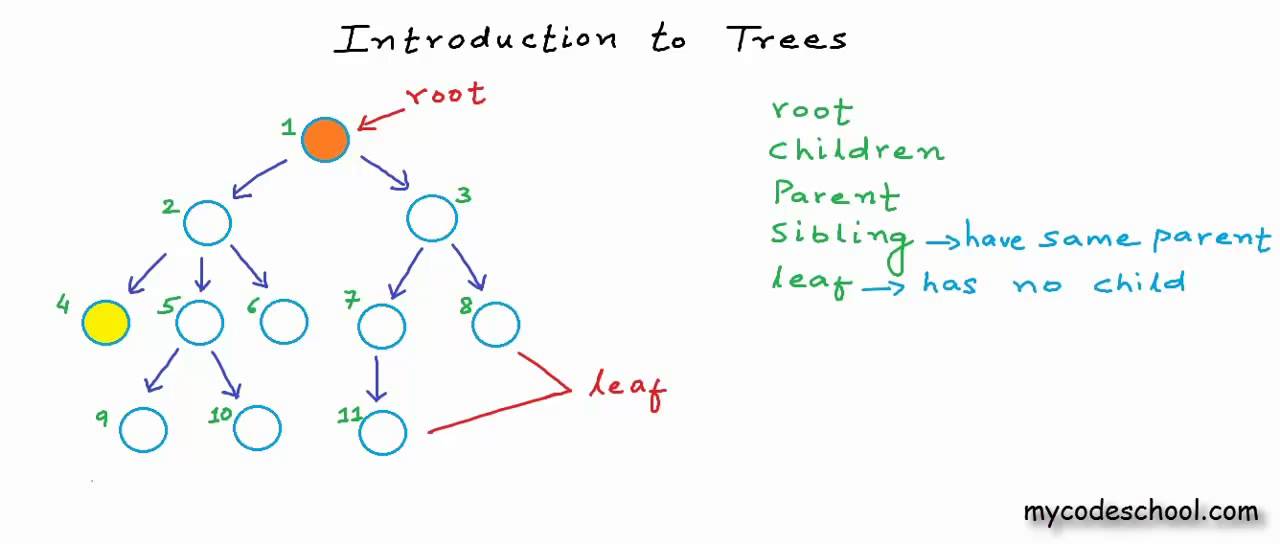
Demystifying Trees: Foundations of Hierarchical Data Structures
Dive into non-linear data structures with this introductory guide to trees. Learn essential terminology, structural properties, and real-world applications to elevate your programming and algorithmic thinking.