
Demystifying Trees: Foundations of Hierarchical Data Structures
Dive into non-linear data structures with this introductory guide to trees. Learn essential terminology, structural properties, and real-world applications to elevate your programming and algorithmic thinking.
Course Overview
Welcome to the foundational course on Tree Data Structures. Unlike linear structures like arrays and linked lists, trees allow us to represent hierarchical relationships naturally. This course will guide you through the transition from linear to non-linear data organization.
What You'll Learn
- The fundamental differences between linear and non-linear data structures.
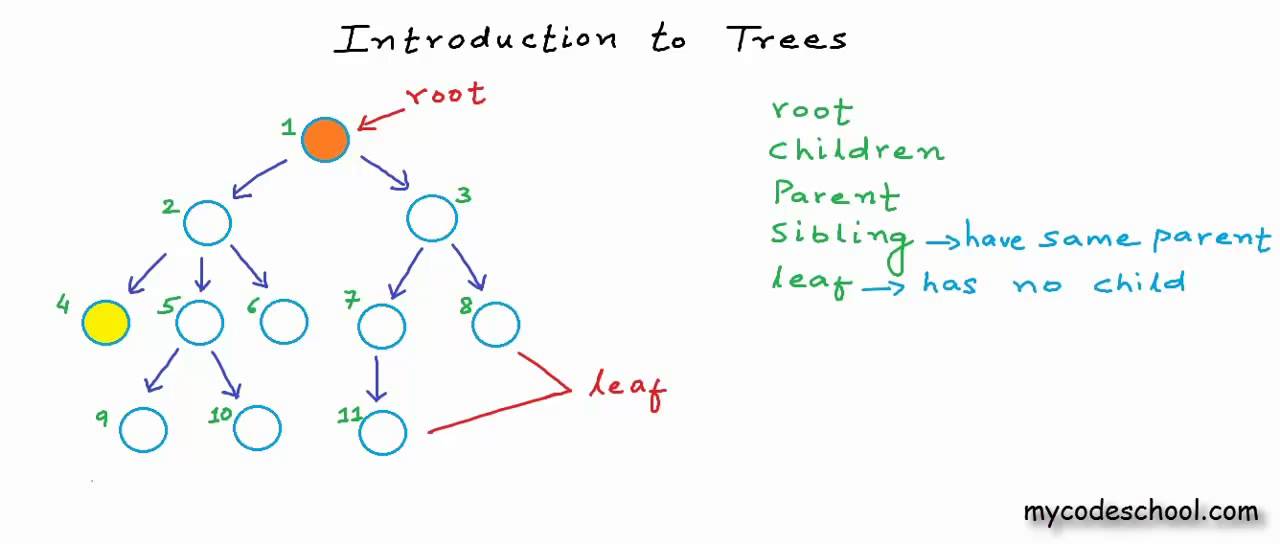
- Essential tree vocabulary including Root, Nodes, Edges, Leafs, Children, and Parents.
- How to calculate tree properties such as Depth and Height.
- Practical applications of trees in modern software development (e.g., file systems, databases, and XML/HTML parsing).
Prerequisites
- Basic understanding of programming concepts (variables, loops, and recursion).
- Familiarity with linear data structures like arrays or linked lists is helpful but not required.
Tools & Technologies
- Conceptual logical models.
- Pseudocode representations.
- Implementation concepts applicable in C/C++, Java, or Python.
Course Content
Introduction to Non-Linear Data Structures
Shifting from Linear to Hierarchical Thinking
Anatomy of a Tree Data Structure
Real-World Tree Implementations
Tree Terminology and Anatomy
The Logical Model of Trees
Analyzing Tree Properties and Metrics
Real-World Applications of Trees
Organizing Data Hierarchies: File Systems and the DOM
Advanced Tree Applications: Databases and Compilers
This course includes
- 36m on-demand video
- 7 lessons across 3 chapters
- 3 interactive quizzes
- Access on mobile and desktop
- Source playlist on YouTube
Share
Related Courses

Spring AI in Practice: Building Java-Powered LLM Applications
Learn how to integrate generative AI models into Java applications using Spring AI. Connect OpenAI, Anthropic Claude, and local models with Ollama, manage ChatClient configurations, and build a full-stack AI comparison interface with Spring Boot and React.

Architecting Agentic Systems and Tools with Claude and MCP
Master agentic AI design, tool integration, and developer workflows using Claude and the Model Context Protocol (MCP). Learn to build autonomous multi-agent systems, leverage Claude Code in terminal environments, and optimize context engineering for production.

Comprehensive Discrete Mathematics for Computer Science and GATE
Master discrete mathematics for computer science and GATE preparation. Cover mathematical logic, combinatorics, set theory, relations, group theory, lattices, boolean algebra, discrete probability, and graph theory with rigorous proofs, problem-solving techniques, and exam-focused solutions.